Photos from a Kodak Brownie

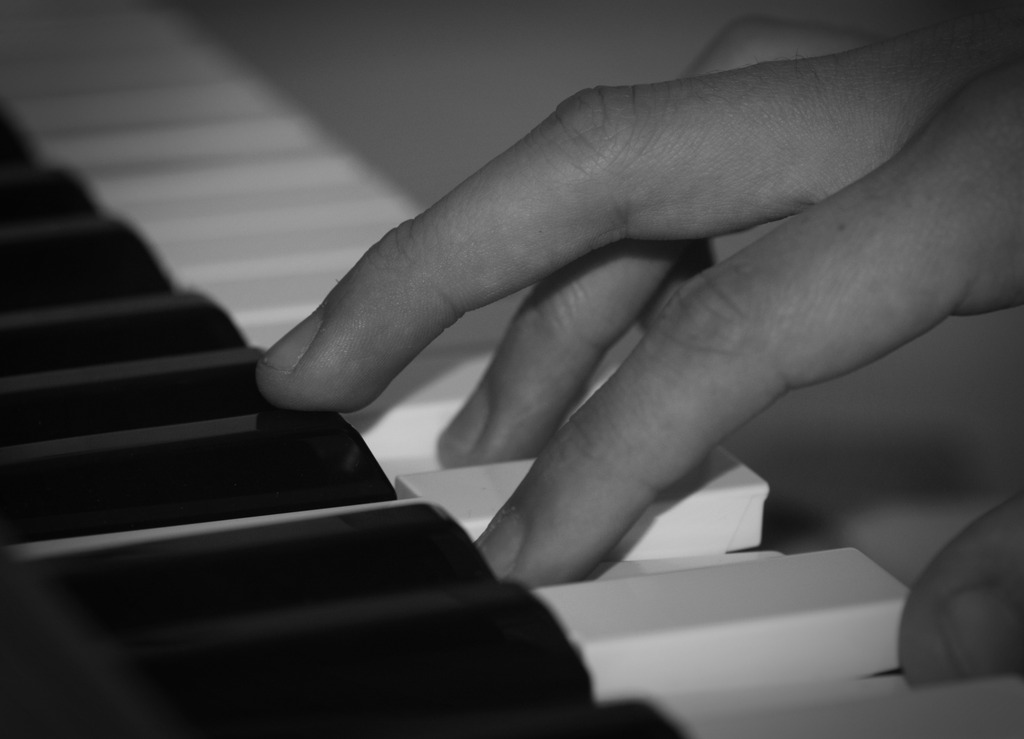
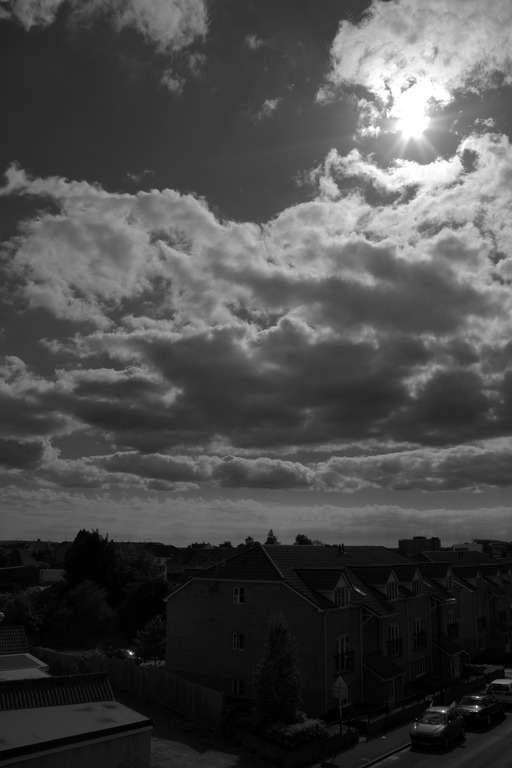
Hana’s Dad recently lent me a 1934 Kodak Six-20 Brownie. I’ve just run my first roll of film through it, and here are the best from the roll.

Unfortunately the scans haven’t come out well – I’m still getting to grips with my new medium-format transparency scanner – an Epson Perfection V500 and it seems to struggle with dynamic range. It doesn’t help that the negatives were slightly over-exposed – probably my fault for using ISO400 film in a camera from the 1930s.

On the other hand, it gives them a rather faded, vintage look and feel.

My first medium format negative

I’ve recently taken an interest in medium format photography. Aside from the “disastrous” first roll, this is the first picture I’m pleased with it.

My Conway camera doesn’t have a tripod socket so this long exposure (probably about 15 seconds) was taken by holding the camera tightly against my balcony railings. Unfortunately I knocked it a bit, as you can see by the kink in the headlights in the distance.

The past

This week’s Photo Challenge theme is the past.

Take a photo that has a connection with the past. It could be something that reawakens a memory for you, or invites you to reminisce. It could be an old item, or an ancient place. Perhaps a person.

I decided to recreate a self-portrait of my Grandad that he took while on active service in Korea in 1955. We’ve been told we look quite alike, and I tried to emphasise this with my choice of location and clothes.

So this is my way of keeping the past alive.

Incidentally, if you are interested in my Grandad’s unusual colour photos of post-war Korea, you can see them all on Memories of Korea.

New camera: Lomo Lubitel 166

I’ve been on a bit of a rampage with vintage cameras lately. Not content with three “boring” Canon 35mm SLRs, I recently acquired a late 1950s Paxette point’n’shoot and a mid 1950s Conway box camera.

The Conway was my first foray into the world of medium format, and I like it. Only days after developing the first couple of rolls of film from it, my Hana’s dad lent me a 1934 Kodak Six-20 Brownie. This takes a slightly different format film: 620 instead of 120 (but that’s a different story).

But I digress. Today Hana and I went to a car boot sale, and I spotted a LOMO Lubitel 166.Β  (cyrillic: Π›ΠžΠœΠž Π›ΡŽΠ±ΠΈΡ‚Π΅Π»ΡŒ. Means amateur in Russian). I’ve been looking at the Lubitel range and other inexpensive TLRs on eBay for some time, so I snapped it up. Yay for my sixth camera.

It’s in extremely good condition, albeit without the neck strap, lens cap or any other accessories. The glass is scratch-free and shows no signs of fungus. All of the mechanisms appear to work correctly, apart from the self-timer (which counts down, but fails to fire the shutter).

There’s not really much more I can add at this stage, except to say that I plan to get film in it as soon as possible, and the results will be on my photo blog when I’ve found a better method of digitising 120-format negatives than the one I used here..

Converting 120 film to 620

Recently I was lent a Kodak Six-20 Brownie box camera. Rather than the 120 medium format film I’ve used in the past, it takes 620 film.

The film stock is identical; only the spools differ. The 620 spool has a thinner axle, the end caps have a smaller diameter by about 2mm, andΒ  the overall length of the entire spool is about 2mm shorter.

Original 120, 620 and modern 120 film spools with modern 120 film

120 film is still readily available but 620 film is very hard to find. There are two options:

  • Buy some empty 620 spools, and respool the 120 film in a darkroom
  • Modify the 120 spool of each new film by filing it down

I find roll film quite frustrating to work with in a darkroom and I didn’t fancy respooling it unless there was no other choice. So I decided to have a go at butchering a roll of 120. Even if it went wrong, I’d only have ruined Β£4 of film.

With the film still on the roll as new, I filed down the fatness of the end caps and then filed down their diameter. Fortunately I had one empty 620 spool to use as a template for my hack. It took only about ten minutes, but obviously filing away plastic left a lot of dust, so I had to make sure the film was extremely clean before putting it in the camera. I brushed it, and sprayed it with a can of compressed air.

The film now fits nicely into the Brownie, and I look forward to shooting with it. πŸ™‚

User manual for the Conway Synchronised box camera

Whenever I buy old or hard-to-find things from the Internet I often like to look at the user manuals first. But it can often be hard to find them, and I’m grateful when other people take the time to scan or type out their product literature.

I recently bought a Conway box camera, dating back to the late 1950s. It came with a user manual, so it’s the least I can do to scan and reproduce it here. Hopefully it will be useful to somebody.

I’ve also linked the manual on camerapedia.org – a great resource for finding out about vintage cameras.


Coronet Conway manual

A fly

I’ve now owned my Tamron 90mm macro lens for a few weeks, and yet hardly used it. Today I walked to some local woodland and crawled around for half an hour taking photos of insects.

It’s quite hard to hold the camera still enough, and you need a lot of light. You need to keep the shutter short enough that the movement of your hands doesn’t blur the photo (let alone movement of the insect), but at the same time you need to keep the aperture small enough that the depth of field is deep enough to have the whole insect in focus. To counter this, you can increase the ISO speed but this can lead to otherwise poor quality photos.

In the shade of the woodland, there simply wasn’t enough available light for this kind of photography, and I left my macro flash at home. In the areas where there were clearings and strong sunlight, there was enough light for the photography but some of the highlights were burnt out (as in my example).

I will most definitely revisit this woodland with my macro flash and a few hindsight-based ideas on how to get the best out of the lens.