Astrophotography

It’s winter, it’s dark early, and the Arctic snap passing over the UK means it is nice and clear in the sky. Last night I went to my top-secret stargazing location in Somerset. It’s far enough to avoid the worst of Bristol’s light pollution, but there is still an orange tint in the sky. It’s not a bad compromise between darkness and convenience – in the past I’ve seen the Milky Way from this site but last night it was almost a full moon, so not much chance of seeing any deep-space objects.

Geek info: skip this block if you don’t care about telescopes.

All pictures taken with a Celestron NexStar 127 SLT Maksutov-Cassegrain telescope, f=1500mm, d=127mm, f/12. Alt-azimuth mount (sucks for astrophotography) so exposures are kept short to avoid rotation of the field of view during exposure. Camera is a Canon EOS 600D mounted at the telescope’s prime focus, no eyepiece or extra lens. I would normally use a Barlow lens or teleconverter to boost magnification but I accidentally left it at home.

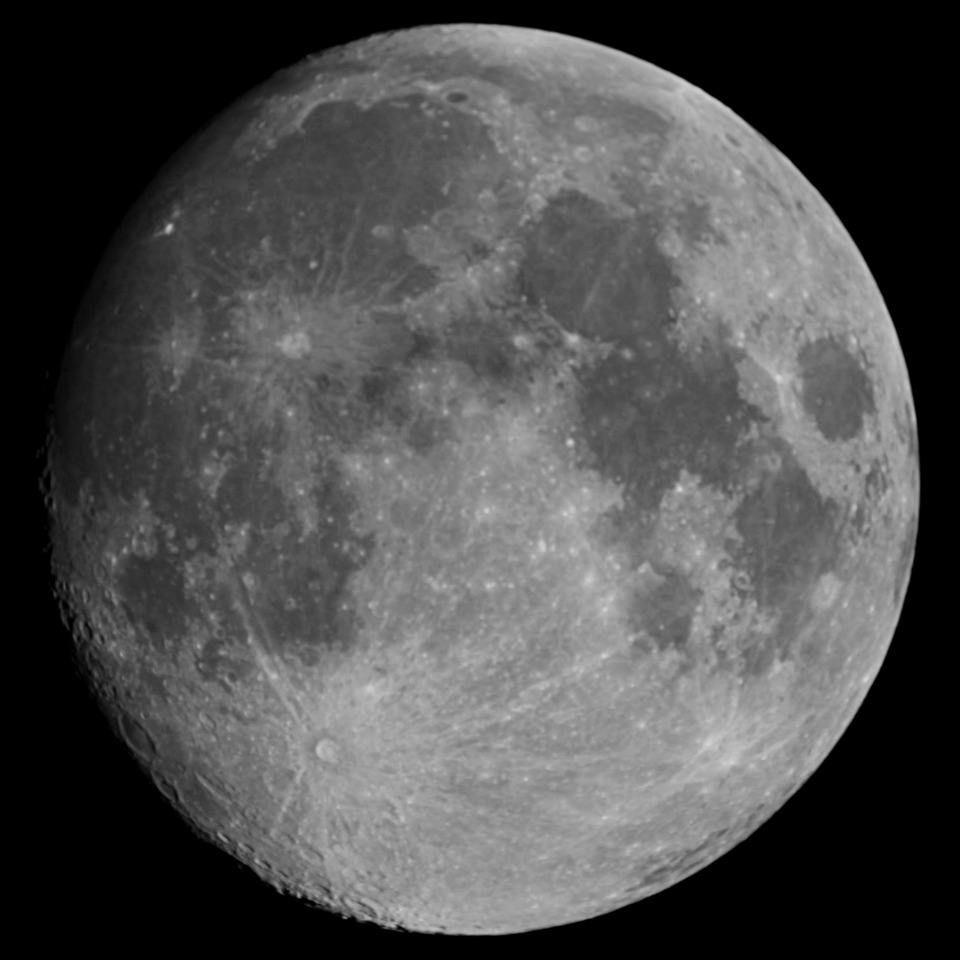
First and foremost, I photographed the moon. At my telescope’s focal length of 1500mm the moon neatly fits in the frame of my crop-sensor DSLR. I also took a couple of pictures on my film-based Canon FTb. The moon doesn’t fill the frame on this camera, but I’ll be able to enjoy printing the negative in my darkroom.

Composite of 20 shots, using only the blue channel, 1/125s, ISO 100.

Moon

Then I turned my attention to Jupiter, which was bright in the sky. In the eyepiece I was clearly able to see three of the four Galilean moons but they don’t appear in any of the photographs. I’m not sure if that is due to poor focusing, or insufficient dynamic range. I’m annoyed that I accidentally left my Barlow lens at home – that would have given me three times the magnification and Jupiter would have been larger in the frame and would have better resolution. Always next time…

Composite of 36 shots, 1/160s, ISO 800.

Jupiter

Last but not least, I tried one of the brighter Messier objects. M45 Pleiades Cluster was visible with the naked eye so it seemed fair game in the telescope, despite the full moon. Unfortunately I underexposed mine. It should have looked like this. That picture says it was taken with seven 180-second exposures. Next time I’ll give it a bit more exposure and see if I can capture some of the nebulosity.

Composite of 33 shots, 1/5s, ISO 3200.

Pleiades

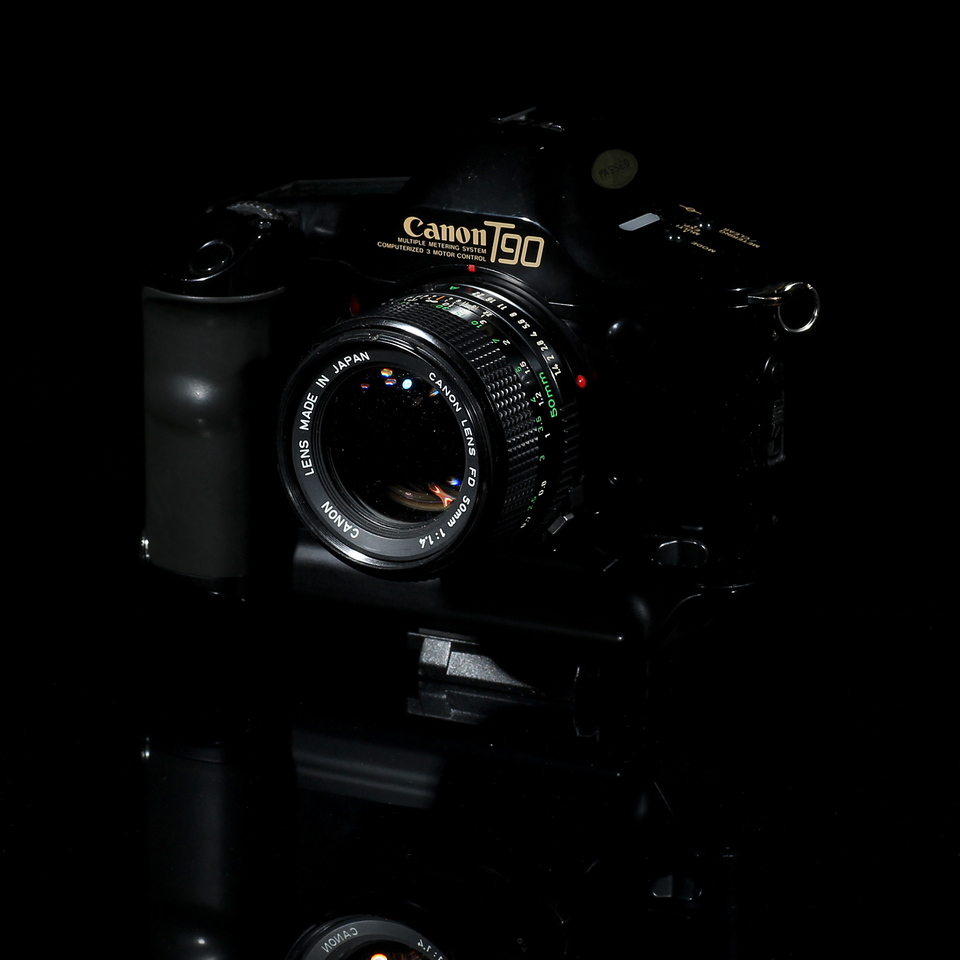
Canon T90

Released 1986

My Canon FD-mount cameras are probably my most-used film cameras. Quite often on outings I’ll take the AE-1 Program and the FTb and load each with a different type of film. Sometimes, the FTb’s crude metering isn’t quite up to the job in challenging situations so I wanted an FD body with slightly more advanced capabilities. I’ve fancied a top-of-the-range T90 for a while, so I bought one.

It fits somewhere in between the AE-1 Program and the EOS 300, in that it uses a command dial like the EOS film and digital cameras, rather than the traditional shutter speed knob of the older 35mm SLRs.

Canon T90
Canon T90

At a glance

Lens Canon FD mount
Film 135
Focus SLR split screen & microprism
Meter CdS with program

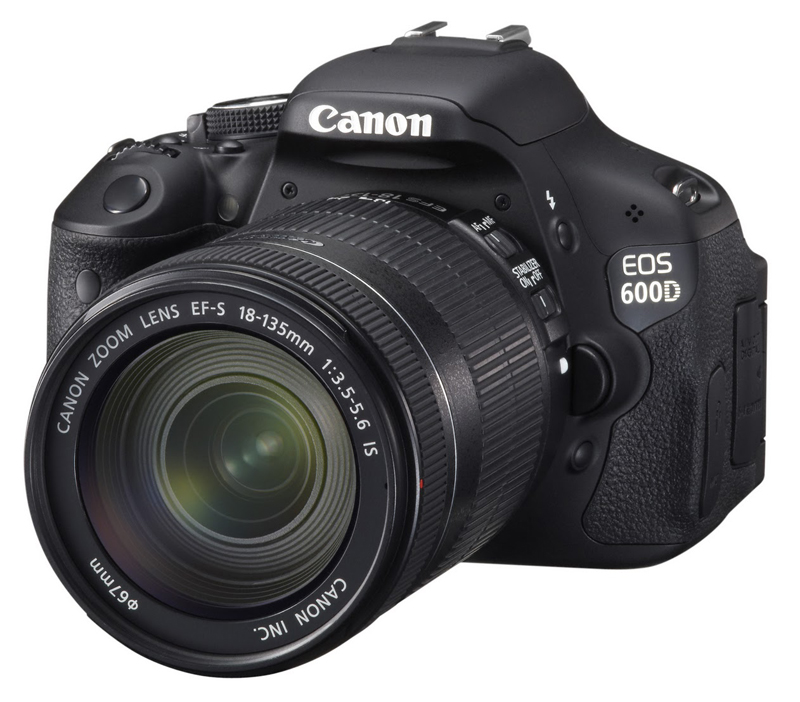
Canon EOS 600D

Released 2011

I bought the 600D to replace the 450D. There was nothing wrong with the 450D but Canon sensors of that age are not great for astrophotography. The 600D offers photography at up to ISO 12800. The noise doesn’t matter since the images will be stacked later on.

I own two 600D bodies, the other of which has been converted to full-spectrum so I can use it for infrared landscapes and astrophotography.

See all photos taken with the 600D, or search by lens.

Canon EOS 600D

At a glance

Lens Canon EF & EF-S mount
Film Digital!
Focus SLR auto
Meter Digital

Project 35 – hopefully resuming soon!

I started Project 35 on 22nd August. If all had gone to plan, I would have finished the film on the 26th September. However, nothing ever goes to plan. I’ve only used about half the film so far. I’ve been busy, I’ve been ill, I had time off work and accidentally left my camera on my desk. Now the weather is bad.

KMZ Zorki 4

Nonetheless, I plan to resume Project 35 tomorrow, and push through and finish the film. I don’t know quite if I’ll manage that – things are still busy at work what with the start of term. I hope to be able to find some inspiration within a short walking distance of my office!

Watch this space! 🙂

Particularly keen-eyed readers will notice that the picture of my Zorki 4 is fitted with a 50mm Jupiter-8 lens. Naturally, I’m completing Project 35 with a 35mm Jupiter-12 lens. Apologies for the confusion. It won’t happen again.

Slides!

I recently finished a roll of slide film and sent it off for processing. (I can’t currently do E6-process films in my darkroom). I love the ridiculous colour saturation you get from slides. Coupled with my latest purchase, an ultrawide lens, it makes for some pretty dramatic pictures. Here are my favourites.

How many photos?

Earlier today I read an article that attempted to estimate the total number of photographs ever taken. (Spoiler: it’s about 3.5 trillion). I decided to have a look back over my own archive and see how many I’ve taken.

Over the course of my life, I’ve taken approximately 3500 pictures on film and 35,000 with a digital camera. That’s almost 40,000 in total, which is about 4 per day since the day I was born. The photographs are not distributed uniformly, though:

It’s a little hard to see what’s going on, but it makes much more sense if I fill in a few life events.

  • 1998 – school trip to France. I shot a load of film.
  • 2002 – my parents bought their first digital camera
  • 2004 – I got my first camera phone, which immediately replaced film. I start shooting more pictures as it is free to do so.
  • 2006 – an uncharacteristically quiet year. I started my third year at uni and was probably too busy/lazy to take pictures all the time, compared to the previous two years of drunken frolics and cameraphone action
  • 2008 – I got my first “serious” digital camera and took up photography as a hobby
  • 2009 – I started shooting film again
Other notes:
  • The graph isn’t great. No digital at all was shot until 2002 and yet a thin orange line exists where it should be zero
  • I think quite a few films from 1991-1997 are missing. Several years report zero film usage and I don’t think that’s right. But I was just a kid and not really so serious about archiving my negatives!
  • I think a few digital photos from 2003 have gone missing too. Around that time, the family PC’s hard disk broke down so the pictures were probably lost then. Don’t worry, I make backups now!

Second pinhole test

After making some pinholes recently, I tested them with my DSLR. It has a tiny sensor and it’s not even the camera I intended to use the pinholes with. So naturally I’ve now tested them with my Horseman 980 view camera, which has a sensor area sixteen times greater than a crop-sensor DSLR.

Pinhole mounted on camera

I was hoping for better results as the sensor is significantly larger than the diameter of the pinhole. Here’s what I found.

Looks to me like the 0.3mm or 0.4mm pinhole is the sharpest. Last time, the 0.3mm pinhole was the sharpest on my DSLR. As expected, a slightly larger pinhole is needed for the larger film format.

The images are remarkably good considering they are made with nothing more than a hole in a piece of metal!

Tewkesbury, Exmouth & Dawlish

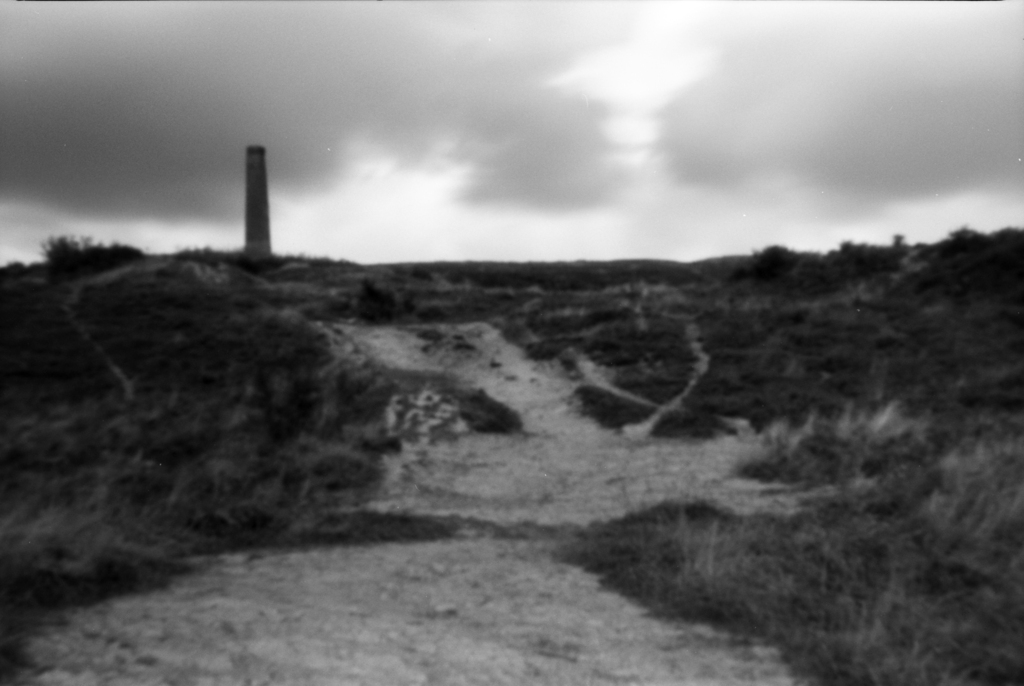
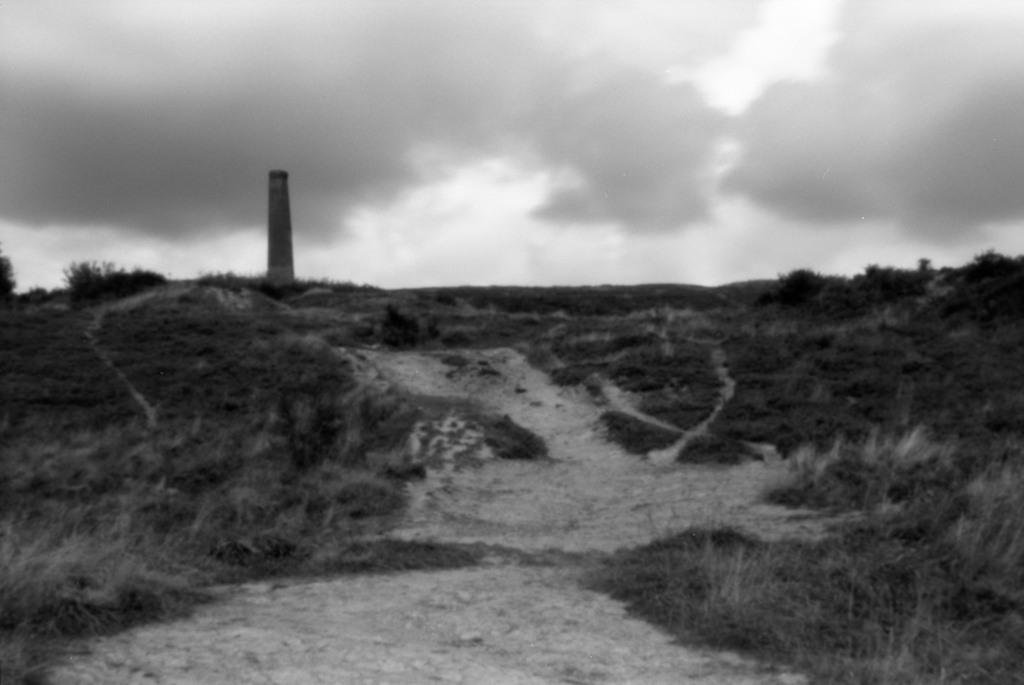
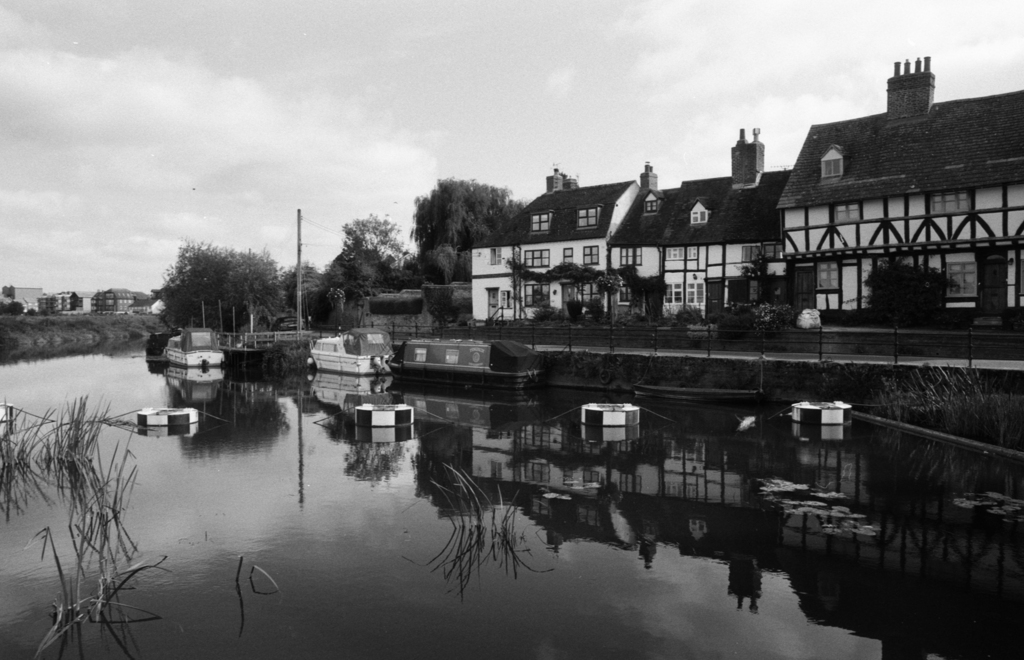
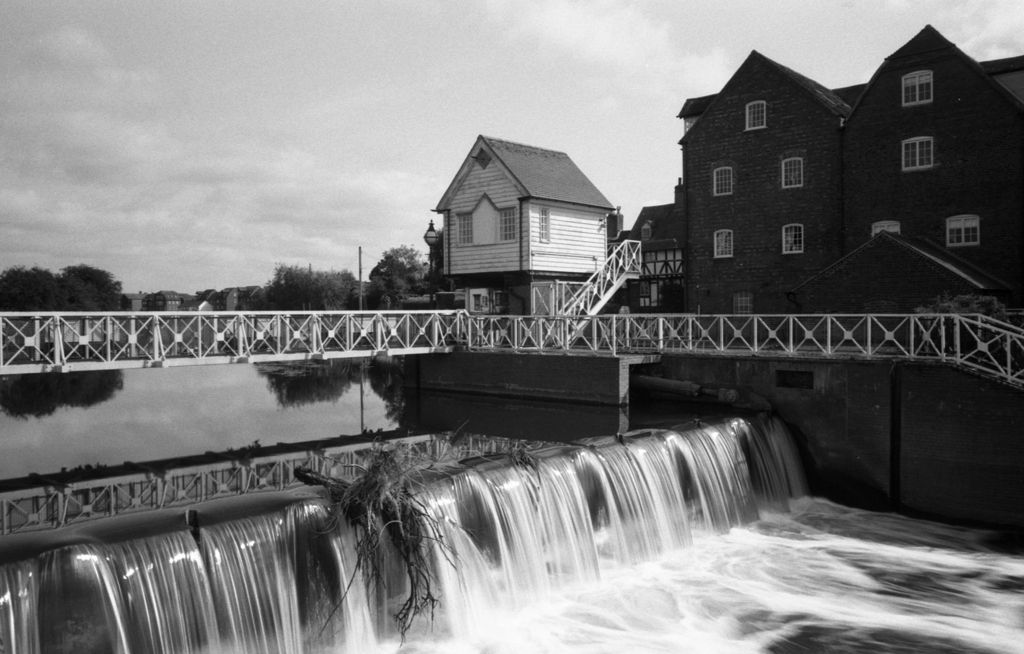
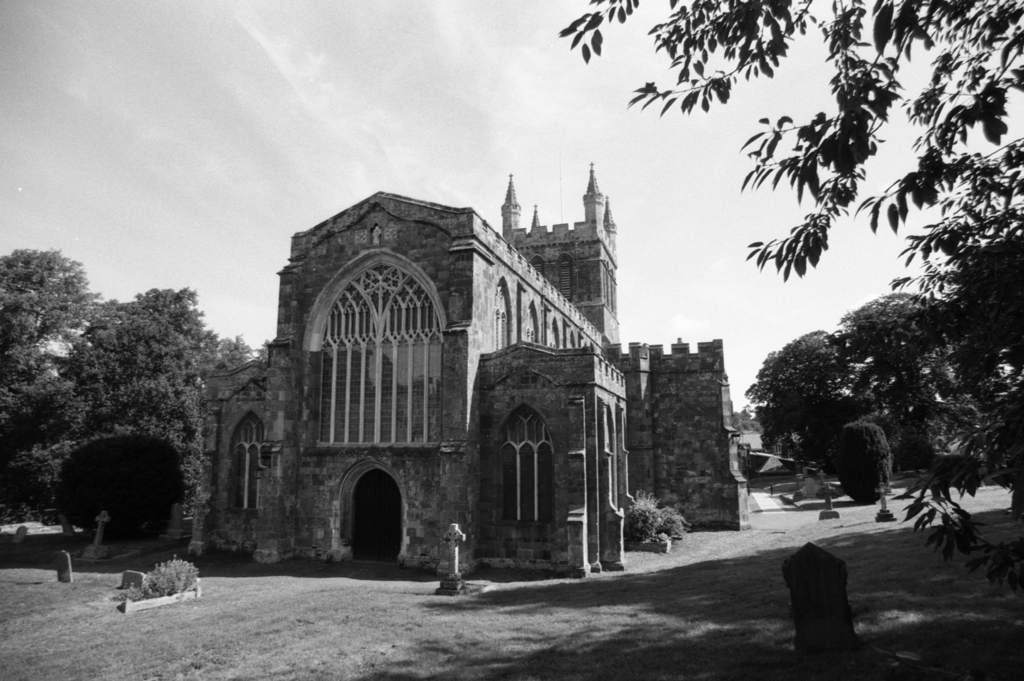
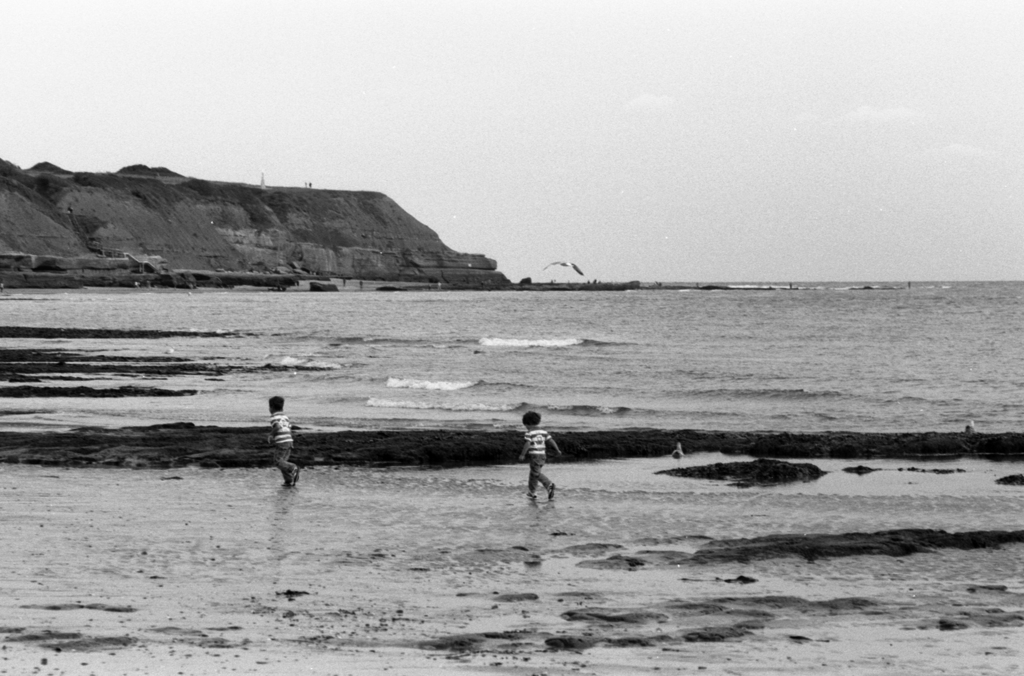
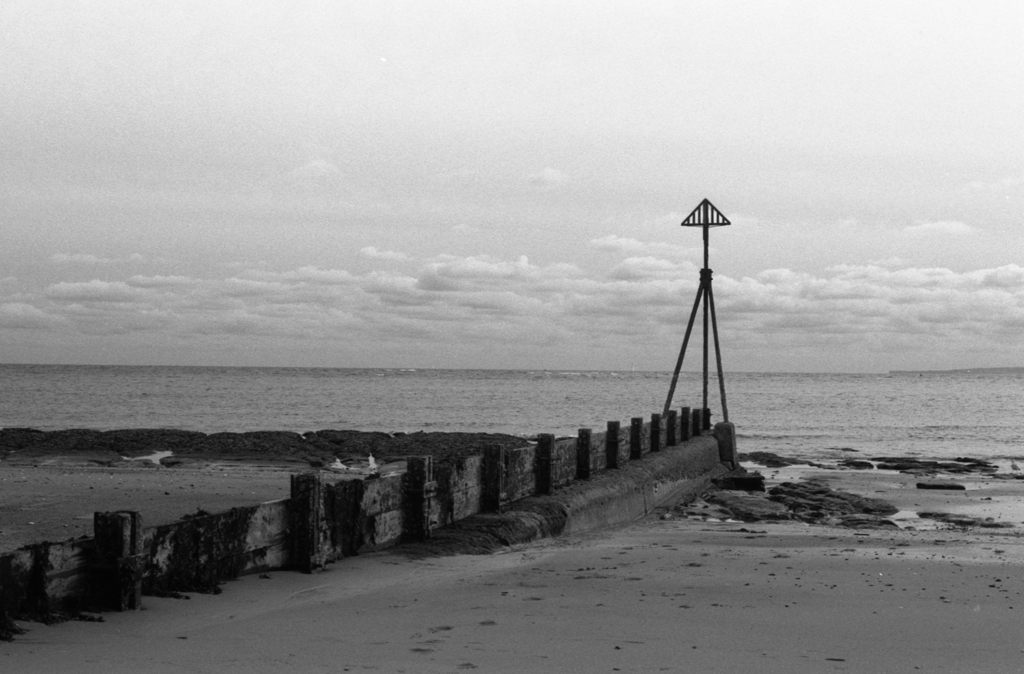
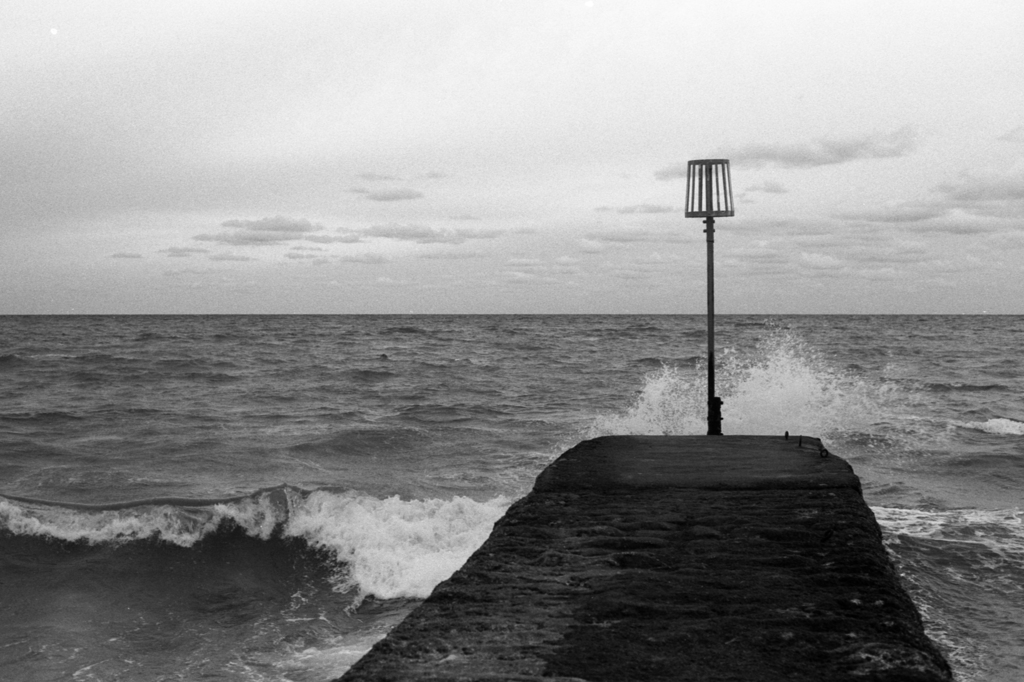
This is a catchup post from a roll of film that has been in my Canon FTb for a while. Part of the film is the outdoor shots from our trip to Tewkesbury (you may have already seen the interior shots). The rest of it is a day trip to Devon where we visited Crediton, Exmouth and Dawlish.

It’s quite nice to have the opportunity to spend some time with my favourite type of photography: landscapes and architecture.

Creativity

I first got into this photography malarkey in 2008 (and in 2010 I wrote about how I got hooked). I’ve had great fun with it since then, and I feel that I’ve improved significantly. I know much more these days about the technicalities of photography, and the theory of art. When I look back at some of my earlier work, I can see its technical deficiencies, poor composition or shonky post-production. But for some reason, I still consider a lot of that work to be among my best. I’m still having fun, but I’m not sure if I’ve improved as much as I would have liked.

Fraser

Why is this? Perhaps as my skill has grown, my inspiration has waned. Or maybe it is fond reminiscence for a past time: holidays and memories that allows me to look on my earlier work with rose-coloured spectacles. Possibly my lack of improvement is a figment of my own imagination, and everyone except me thinks my work has become better with time. Am I too close to my own work to be a fair judge?

Livorno lighthouse

I do struggle with inspiration and creativity. I have the equipment and the technical knowledge to know how to use it, but I’m not always sure what to point the camera at for maximum effect. I’m a geek, not an artist. I bought my first camera to play with as a toy. However, I’ve done my best to learn and improve my artistic skills by studying and appraising the work of the photographers I admire most. I’m still a bit short on ideas, though.

My inspirations

Portofino

I’m genuinely curious – does anyone who reads this blog think that my work has improved significantly since 2008? I’ve selected some of my favourite pictures from 2008, but please have a look through some of the archives and let me know your opinions in the comments.

I would appreciate full honesty – we’ve already established I’m an emotionless nerd 😉 I’ll be genuinely interested to hear what third parties think of my progression.