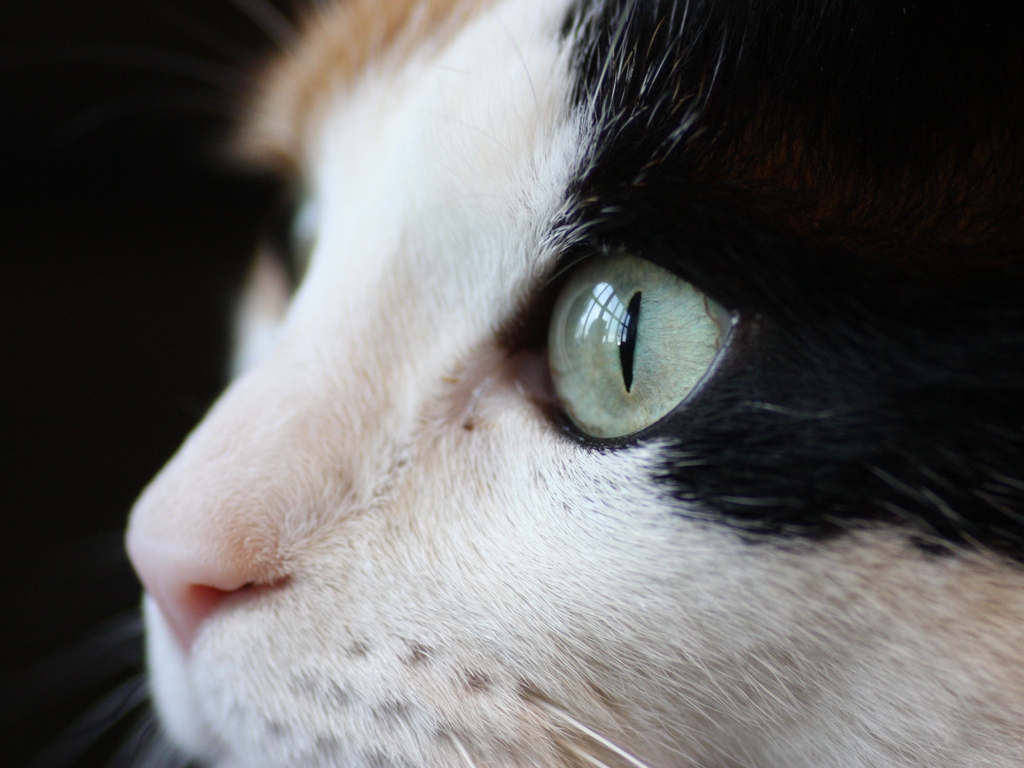
Well, eye of the domesticated cat. Here’s another snap of Lou Lou.

Well, eye of the domesticated cat. Here’s another snap of Lou Lou.
This is my entry for this week’s Photo Challenge: Age & Youth.

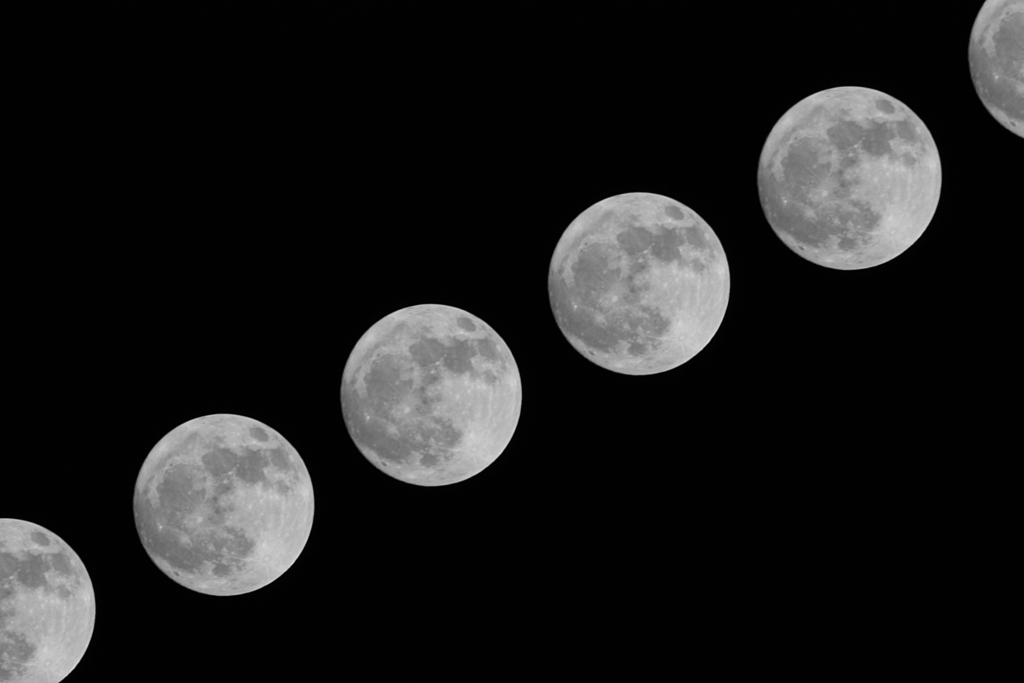
These photos of the moon were taken three minutes apart each. It’s surprising how quickly the moon moves across the sky!

I plan to revisit this idea when the moon is lower in the sky, and incorporate some trees or buildings
Consumer photographic lenses are almost always sold by their focal length when used on a 35mm camera (or full-frame professional DSLR). It’s already confusing enough to work out what their effective focal length is when used on an APS-C sensor (most consumer DSLRs), but since I’ve been getting into medium-format photography it’s even more confusing to work out what each focal length does what on which camera.
So I’ve done a little research, and prepared a table. I’ve included data for five “common” photography formats with their crop factors. The numbers are the approximate focal lengths in millimetres. Of course the boundaries for each category of lens are rather woolly at best.
| Film or sensor format | |||||
|---|---|---|---|---|---|
| Lens type | APS-C | 35mm | 6×6cm | 6×7cm | 5×4in |
| Fish eye | 10 | 16 | 30 | 35 | 45 |
| Super wide | 12 | 20 | 40 | 45 | 65 |
| Wide angle | 17 | 28 | 50 | 55 | 90 |
| Normal | 30 | 50 | 80 | 90 | 150 |
| Short telephoto | 49 | 80 | 150 | 180 | 270 |
| Medium telephoto | 123 | 200 | 350 | 420 | 520 |
| Long telephoto | 185 | 300 | 500 | 600 | 800 |
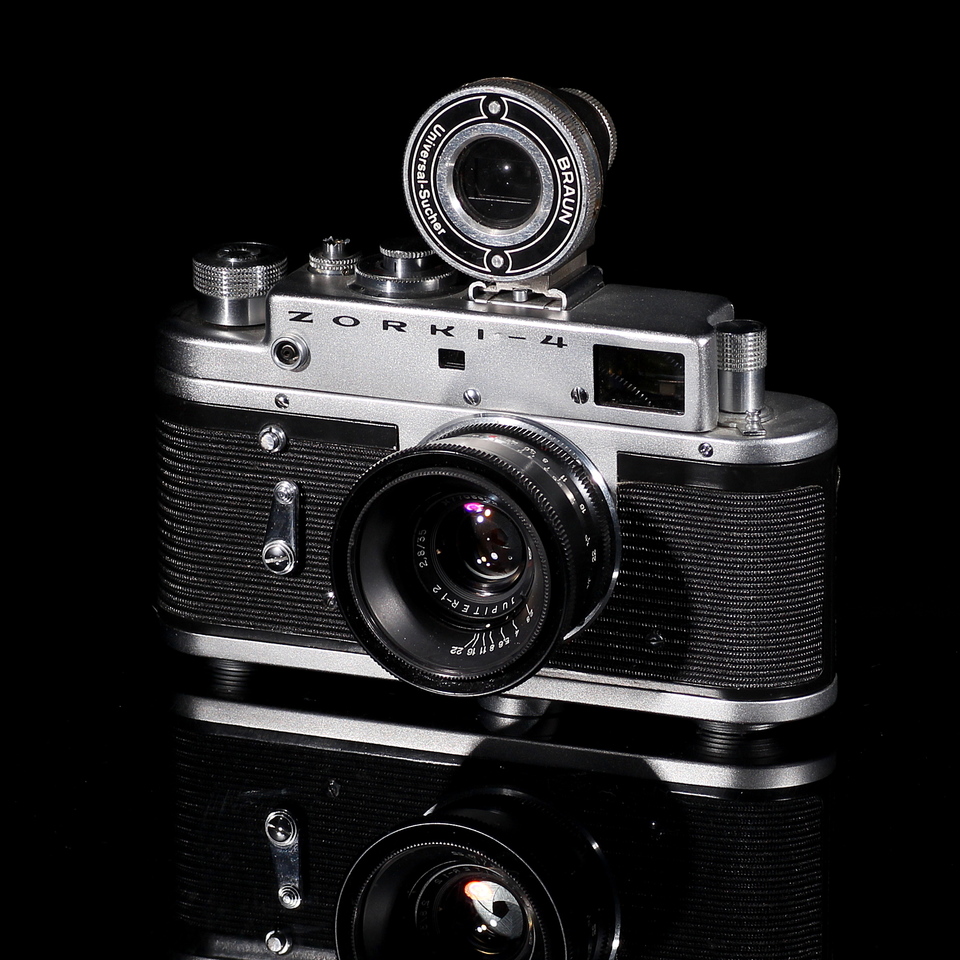
Released 1956
This is my first rangefinder camera. It’s also my first compact camera that has interchangeable lenses. It has some pretty unusual quirks, but it’s fun. There is some excellent glass available in M39 mount so this is a high-quality photographic tool, and a good alternative to an SLR.
See all photos taken with the Zorki 4.

| Lens | M39 mount |
|---|---|
| Film | 135 |
| Focus | Coupled rangefinder |
| Meter | None |
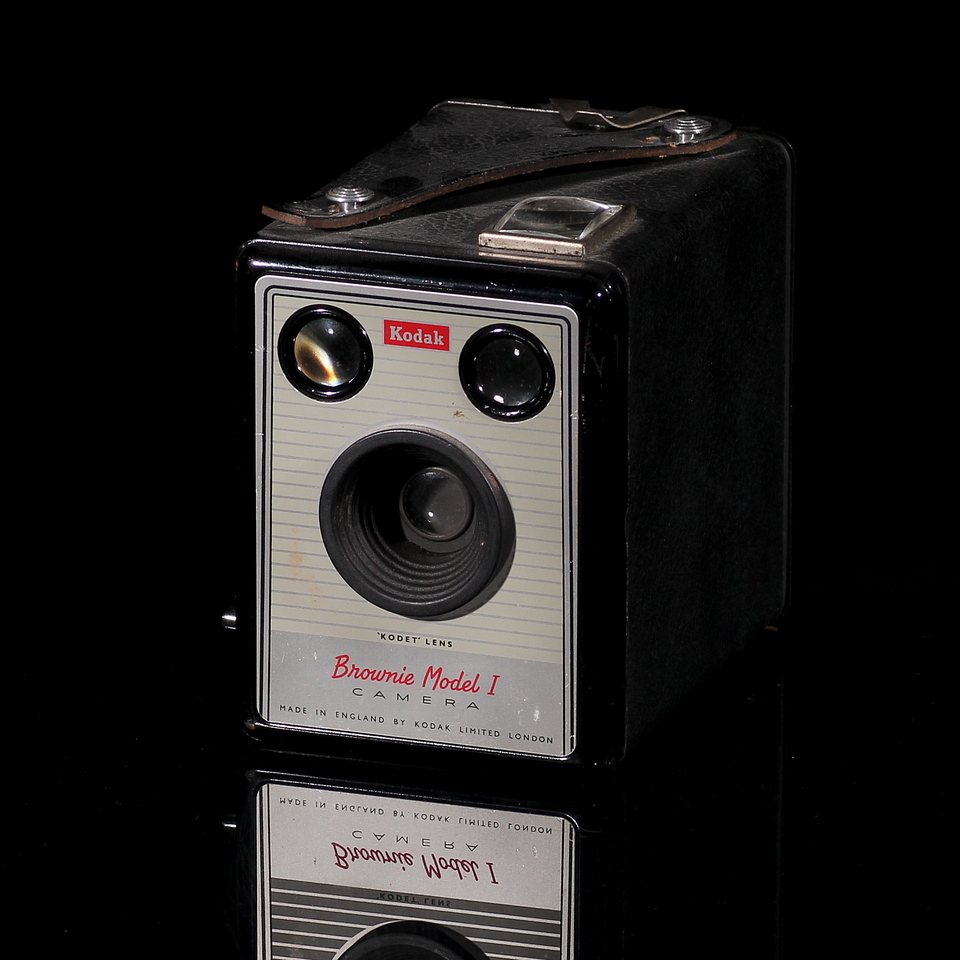
Released 1957
This is another “dumb” box camera with no manual controls, like the Conway. It’s in mint condition and with its original case. I like it because its shutter is more reliable than the Conway.
See all photos taken with the Brownie I.

| Lens | Fixed 100mm f/14 |
|---|---|
| Film | 620 (6×9) |
| Focus | Fixed |
| Meter | None |
Released 1967
This is a simple viewfinder camera with an uncoupled selenium light meter. It’s reasonable, and OK to use. What the light meter adds in usability over fully manual cameras, the lack of any kind of focussing aid takes away.
See all photos taken with the Paulette.

| Lens | Fixed 45mm f/2.8 |
|---|---|
| Film | 135 |
| Focus | Guess |
| Meter | Uncoupled selenium |
Released 1980
This is my first TLR. I saw it at a car boot sale and snapped it up for a bargain price. At the time of writing, this is my only medium format camera with the ability to focus, and with control over the aperture and shutter.
It’s much more rewarding to work with than a box camera, and good fun to sling it round your neck and use the waist-level finder.
See all photos taken with the Lubitel.

| Lens | Fixed 75mm f/4.5 |
|---|---|
| Film | 120 (6×6) |
| Focus | TLR with ground glass |
| Meter | None |
Released 1959
The Paxette is quite a nice compact, with a fixed shutter speed at 1/40, but variable aperture and focus. The basic selenium meter doesn’t work but that’s OK. It’s still perfectly usable as a manual camera.
See all photos taken with the Paxette.

| Lens | Fixed 40mm f/2.8 |
|---|---|
| Film | 135 |
| Focus | Guess |
| Meter | Uncoupled selenium (broken) |
Released 1988
This is yet another not-very-interesting SLR. The most noteworthy point is that it has “power focus”. This is manual focus, but adjusted using a thumbwheel and an electric motor, rather than by twisting the lens barrel.
Unusually for an SLR, exposure is fully automatic unless you buy the additional “manual control unit” which clips on the side and has knobs to adjust the aperture and shutter speed.

| Lens | Olympus OM mount |
|---|---|
| Film | 135 |
| Focus | Power focus with split screen |
| Meter | Auto |



 Jonathan Gazeley