Old colour film

One of the classic cameras I took possession of this week was a 1959 Halina 35x, which happened to contain an unused film. I managed to date the film to between 1983-1987 (after 1983 as it had a DX code, and before 1987 because the film speed was given in ASA rather than ISO).

Expired colour film

Yesterday, I exposed the film in my lunch break using the Halina 35x that it had been sitting in for almost the past three decades. I had no idea what to expect, although I was sure the results would be somehow imperfect. Here’s the film in the tank, and the four chemical baths being kept warm in a water jacket.

Developing a colour film

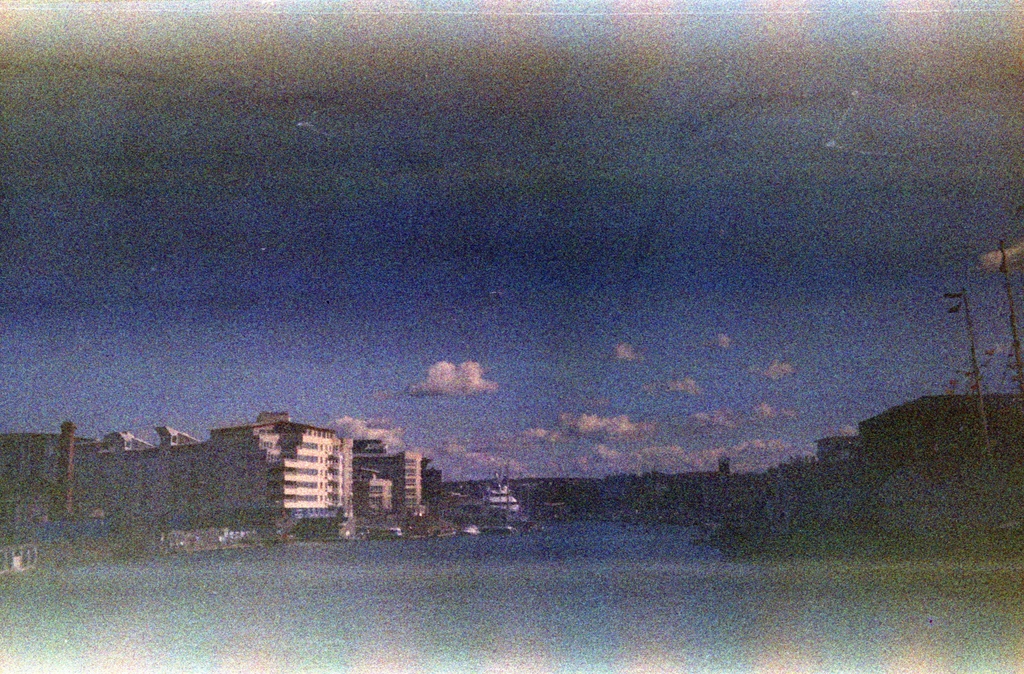
Unfortunately, the film didn’t produce a decent image. There are traces of images just about visible by eye. The scanner was able to make out a little more detail than I was, but the image is pretty unsatisfactory. Before post-processing the entire image was grey – it really is quite hard to emphasise how underexposed this film was!

Manufactured 1983, exposed 2012, developed 2012

In this picture, I’ve made a makeshift lightbox by hanging the film in front of my computer screen and displaying a white background. You can clearly see the pixels, but really what we’re looking at here is the distinct absence of a picture. You can see the reflected Apple logo from the back of my iPhone, but the darker areas are actually the picture. Yep, that’s what we’re working with. Note also the DX barcodes.

Detail of the negatives

In the past, I found a 1980s colour film that had been exposed but not developed. When I developed it, it came out with a slight colour cast that was easily fixed and some blue areas that were not.

Manufactured 1984, exposed 1984, developed 2011

Colour film doesn’t age well, but the real issue is the loss of film speed with age. Development worked well in both cases – I can tell because both films have correctly-exposed DX film-edge barcodes, which are exposed by a machine at the factory and are revealed in development.

The film was that exposed in 1984 has been exposed properly, and fortunately the latent image more-or-less lasted the 27 years before development. The film that was exposed in 2012 has had problems, because the film lost so much speed that I grossly underexposed it. Other than that, it worked. I bet if I had exposed it at ISO 12 (3 extra stops from the rated 100 ISO) it would have been fine.

So here’s my summary:

  • Old colour film works, but expect imperfect results
  • If the film was exposed long ago, just develop it as normal. It’ll probably be fine!
  • If the film hasn’t yet been exposed, give at least 3 extra stops of exposure when you do shoot it.
Inherited cameras

When my grandad died in 2008 I inherited his old cameras. Theoretically, at least, since nobody knew where they were. At the time, I knew he’d taken some wonderful pictures of post-war Korea in 1955 which I published – but we weren’t able to find the camera used to take them, nor did we know what kind of camera it was. A year or two ago we did come across a 1967 Halina Paulette Electric and a 1988 Olympus OM101, but nothing older.

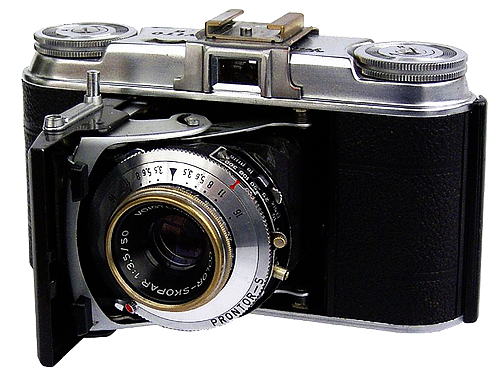
Just this week, my gran happened to find a leather case which contained the camera I knew must exist. It was a 1949 Voigtländer Vito II. The case also contained a 1959 Halina 35x.

Voigtländer Vito II

They are both 35mm viewfinder cameras with manual focus and no light meter. Amazingly, they were both fully working and in excellent cosmetic condition! I guess that’s what you might expect from a meticulous Royal Engineer. The original receipt for the Vito II was in the box, and was handwritten:

Received £15-15-9 in lieu of one Vito II camera purchased from this establishment – 31/7/54 by Cpl King

That’s getting on for £400 of today’s money (2012, if you’re reading this in the future!), and confirms its place as an advanced amateur camera. It had a better lens and shutter than most cameras of the late 40s / early 50s. The lens pops out on a collapsible set of bellows when the door is opened. 60 years after its manufacture, I’d much rather use this than a modern digital camera!

Halina 35x

The Halina 35x already contained a roll of colour film, although it had not been exposed. I have started to use that film, and I hope I’ll be able to post the results here soon. Colour films don’t always age well – the pictures are likely to be colour-shifted but might not come out at all. One way to find out!

The two cameras are beautiful pieces of machinery. I’m proud to own this camera and to continue using it, so watch this blog for pictures from these two cameras, hopefully coming soon!

A foggy day up Troopers Hill

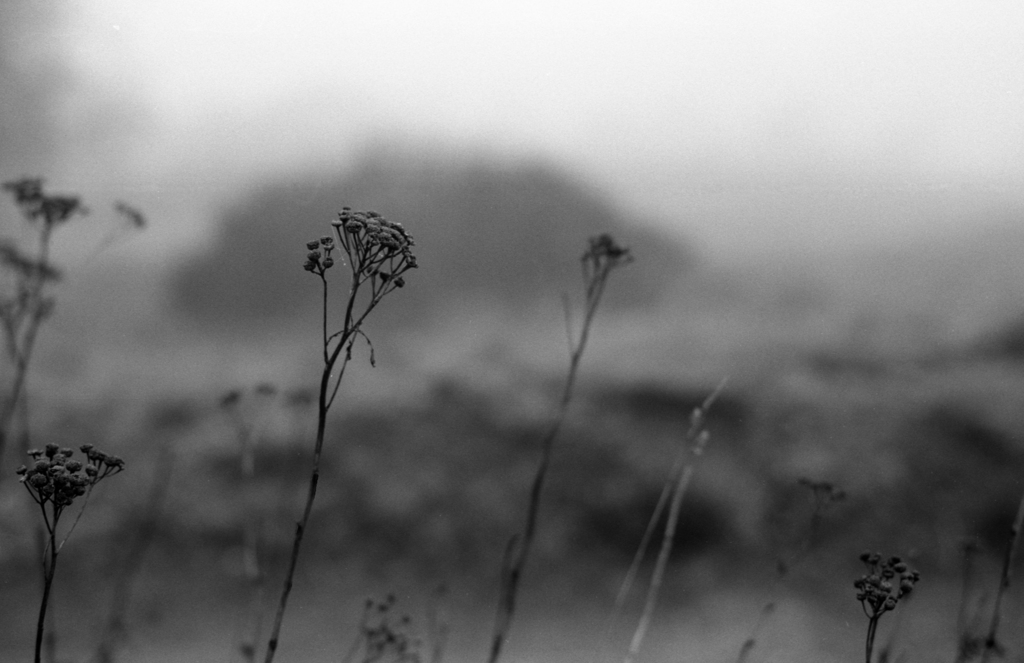
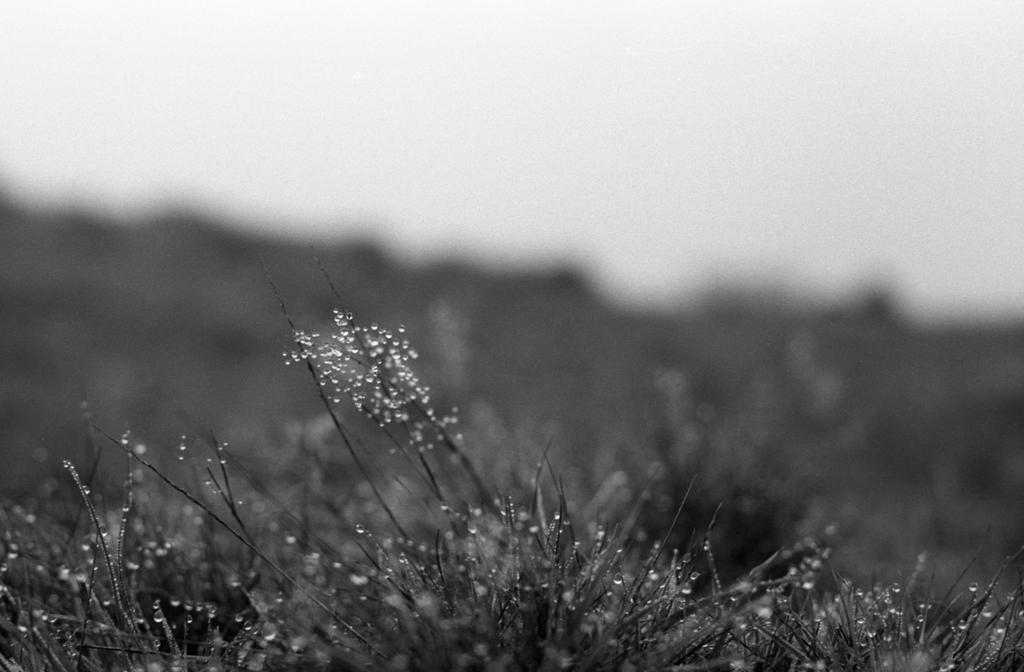
Readers of my blog should know by now that I love fog and mist. There was a thick fog over Troopers Hill the other morning so I got out of bed early on my day off to capture it.
I’ve experimented with a different layout of pictures this time – click the pictures to see the larger versions and use the arrow keys to move through them.

SS Great Britain

Yesterday I visited the SS Great Britain with Hannah and her parents. None of us had been before, and we were treated to a sunny Spring day. The SS Great Britain was the first iron steamship with a propeller rather than paddles, and was designed by Isambard Kingdom Brunel.

Rose, me, Hannah and Arthur

The SS Great Britain is a grand ship, there’s no doubt about that. Unfortunately these days it has a fence around it so you can’t see in from outside, and you can’t get far enough away while inside the fence to take a picture of the whole ship – even with a wide angle lens.

Stern
View from the front of the ship

I was shooting black & white film and the grain of the pictures seemed to lend itself to weathered photos – mainly of the rusty hull and the engine room. The ship is in a dry dock and the underside of the hull is sealed from the environment with glass where the water level would have been. It’s kept at low humidity to prevent further corrosion to the fragile iron.

Pile of scrap
Bow

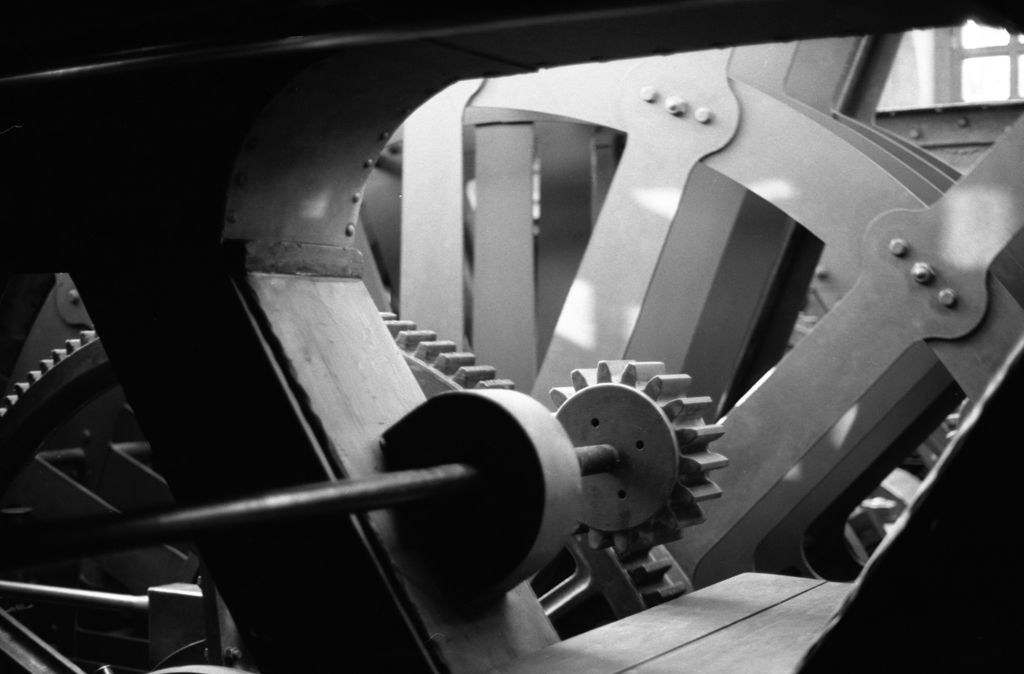
Shooting inside the engine room was also quite dark, and an ideal opportunity to try out my new fast lens – a Canon FD 50mm f/1.4. The original steam engine boasted a whopping (for the time) 1000 horsepower. These days, the machinery is turned over slowly by an electric motor so you can you the pistons, gears and shafts moving. These are all pictures of moving components.

Engine room
Engine room
Engine room

Avon Gorge and other stuff

This film has been in my Canon AE-1 Program for a while, so this assortment of unconnected photos go back a while. Unfortunately the film curled pretty badly while drying and I wasn’t able to scan it properly. Quite a few of these pictures have Newton’s rings in them – rainbow-coloured splodges across the middle of the picture where the film wasn’t flat enough.

The first picture is a pastel sunset looking down Troopers Hill Road. I love the old lanterns but unfortunately I wasn’t able to frame them without including a bit of next door’s caravan!

Sunset

Recently I took a lunchtime photowalk with Paul which led us around the downs, past the sea walls and along the Avon Gorge for a while.

Avon Gorge
Avon Gorge
Wire fence

This ventilation shaft provides air for the Clifton Down Tunnel below.

Ventilation shaft

Since I recently found a fast lens in a charity shop, I took pictures of the cats indoors using nothing but ambient light. Unfortunately shooting a twitchy kitten with such a shallow depth of field has made this picture quite soft.

Mittens
Lou Lou

And finally, this is my fiancée Hannah’s engagement ring. Shot using macro bellows and an old Soviet lens for extremely shallow depth of field.

Engagement ring

Solar System

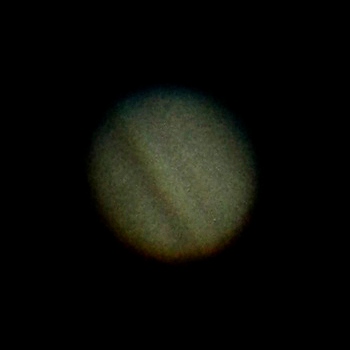
A friend on Facebook pointed out that it was very clear outside tonight. I looked out of the window, and it was indeed – so I grabbed my telescope and decided to try harder at astrophotography (rather than plain old astronomy).

In the past, stuff that has looked great through the eyepiece have been disappointing when captured on camera because of the lower magnification. I need a Barlow lens, but tonight I thought I’d try experimenting using a teleconverter instead.

Here are the pictures I managed to take. If you’re a geek and you like lenses and telescopes, read on to see how I took these pictures. If you’re normal, you might as well stop here 😉

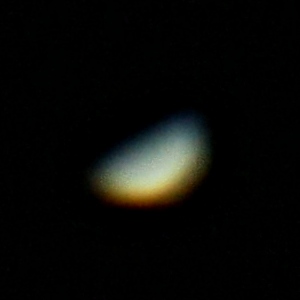
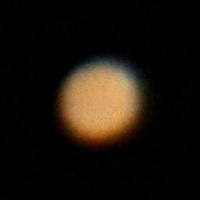
  • Venus has phases, just like the Moon. Here less than half of Venus is illuminated.
  • If you look carefully, you can see a sliver of white around the top of Mars. This is its polar ice cap.

I do have a modern EF-mount teleconverter but the camera refuses to work at all if you don’t attach a valid lens to the other side of it (a telescope mounted via a T-ring doesn’t count). So I was forced to use a 1970s FD-mount teleconverter which is actually better than the modern one, but it does mean I have to use an FD-EF adapter. Mine isn’t great and causes some aberrations.

So here’s my kit list:

With all that teleconverting going on, the f/12 telescope quickly turns into an f/36 monstrosity. That’s pretty slow. Nonetheless, Venus is still bright enough that I could capture it at ISO200, 1/50s.

These images have had very little processing – they haven’t been stacked. I’ve only done an unsharp mask on them. They are pretty low resolution – even with a huge focal length you have to crop an awful lot to make a planet fill the frame.

To improve on this, I would need a larger magnification teleconverter or Barlow lens. Teleconverters generally don’t come in higher powers than 3×, but I have seen Barlows at 5×. Trouble is, I’m already running into stability problems with the telescope’s tripod. It’s extremely hard to keep it still as it is! I’m not sure 5× would be possible on my tripod, and it’s well beyond the telescope’s highest useful magnification.

Ashton Court wildlife

Yesterday, as it was one of the first sunny, Spring days of the year, I went for a walk in Ashton Court Estate with my friend Nathan.

We started off admiring the view back over the river Avon to Bristol.

View of Bristol

I was admiring the shadows of these trees, and then two walkers strolled into the picture. For me, they really made the picture work, and I much prefer this version of the picture to the one without the people.

Tree and walkers

Then we got down to the substance of the day. This week’s Photo Challenge is wildlife, so I tried to take some photos of deer. They were pretty far away from the fence so these are the best I could get with the equipment I had on me. The harsh middle-of-the-day sunlight doesn’t really help these pictures in my opinion, either. One of these pictures will probably be my entry.

Deer
Deer
Deer

As we were leaving, I saw this composition spring together.

Cyclists and walkers

All in all, a very pleasant day out. It was great to enjoy some sunshine, some fresh air, and a good dose of exercise 🙂

Flash in a chimney

I realised recently that I hardly use any flash in my photography. I’d like to improve my skills with artificial lighting and the only way is by practice. Trouble is, I’m not really interested in portraiture, which is the most common use for strobes. Today I was inspired after seeing some pictures of night landscapes lit with artificial light, so I decided to try it.

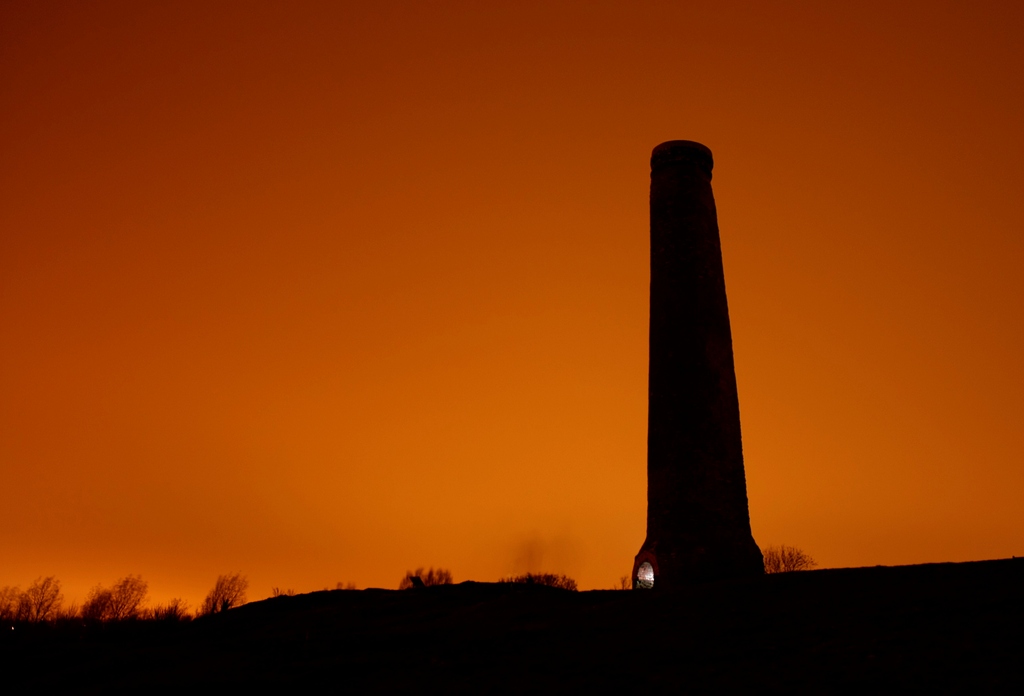
This shot of Troopers Hill chimney was lit with two flashes, one inside the chimney furnace and one behind it. I was hoping the one behind it would cause either a shadow pointing towards the camera, or a hazy aura, but the air was too clear.

I was using radio-controlled flashes but unfortunately they were too far from the camera to work, especially as one was inside the chimney and one behind it. The chimney is made of thick stone and is pretty good at blocking radio signals.

In the end I used a 20-second exposure after a 10-second self timer. The camera was too far away for its integrated flash to have any effect on the picture but it allowed me to tell when the exposure started. I pressed the button, sprinted up the hill and stood behind the chimney in the first ten seconds, waited for the first flash from the camera and then triggered the two flashguns by hand.

The effect isn’t what I had imagined but the illuminated furnace brings a focal point to the image and the light polluted sky reminds me of fire.

This concept is definitely one to visit again, bearing these lessons in mind:

  • It would be easier with one person to operate the camera and one to operate the flashes
  • You need a lot more flash power than you think to illuminate large objects. Need a longer exposure and multiple flashes
  • Your eyes acclimatise, but the camera always sees sodium light pollution