Prime, zoom, telephoto or wide angle lens?

On photography forums I see a lot of confusion about what is meant by prime lenses, zoom lenses, and telephoto lenses in particular.

  • A zoom lens is able to change its focal length, i.e. to zoom in and out. This does not necessarily mean that it is a telephoto lens.
  • A prime lens has a fixed focal length. It can be any focal length.
  • A telephoto lens has a long focal length and high magnification, and “sees” a narrow field of view. It can be either a zoom lens or a prime lens.
  • A wide angle lens has a short focal length and low magnification, and “sees” a wide field of view. It can be either a zoom lens or a prime lens.

This table shows the crossover of these lens types, with some typical examples.

Zoom lens Prime lens
Telephoto lens 70-300mm 300mm
Normal lens 18-55mm 50mm
Wide angle lens 10-20mm 20mm

So as you can see, all lenses are either prime or zoom, and also fall into a category of telephoto, normal or wide depending on their focal length. Check out which lenses count as which category.

Just to mix things up a bit, some zoom lenses span two of the categories, so an 18-135mm lens would be a normal-to-telephoto zoom lens.

Hope this helps someone!

Another sunset at Troopers Hill

I spent most of the day around Glastonbury, photographing the Tor from various areas outside the city and exploring the former Glastonbury canal. I took four cameras with me; the digital one stayed in its bag and I shot lots of pictures with the three film-flavoured cameras. Unfortunately I didn’t finish any of the films so you’ll have to wait until another day see the pictures.

Shortly after getting back to Bristol from Glastonbury, there was a strikingly red sunset visible from Troopers Hill, near my house. Having promised myself a relaxing evening to rest my feet from walking, I grabbed my digital camera and telephoto lens and rushed up the hill. In my slippers. It was worth it.

Troopers Hill sunset

Severn Beach Sunset

This weekend Fraser (my best-man-to-be and arch-enemy friend of old) visited so we could go wedding suit shopping with my dad, my brothers, and Hannah’s dad. Success – we found some suits in a suit shop! Who’d have thought? I dunno why women make such a fuss about shopping 😉

So with time to spare, and the promise of a nice-looking sunset, Fraser, Hannah and I headed up to Severn Beach, which isn’t a beach at all, but actually a large mud flat strewn with old tyres and lumps of concrete. Fraser is a fan of industrial architecture and Severn Beach offers lots of industrial buildings, an estuary, a railway and two motorway bridges. Civil engineering heaven!

I took two Canon FD-mount 35mm cameras, one loaded with colour film and the other loaded with black & white, and a rucksack of various lenses that can be used on either camera. The interesting surroundings and spectacular sunset didn’t disappoint and I rattled off a couple of rolls of film – Fraser likewise with his pair of Pentax-mount SLRs.

Kit bag:

  • Canon AE-1 Program with Agfa Vista Plus 200
  • Canon FTb with Jessops Pan 100S
  • Canon FD 28mm f/2.8
  • Canon FD 50mm f/1.4
  • Canon FD 70-210mm f/4

West Quantoxhead

Yesterday there was wonderful Spring weather here in the South-West, so I decided to take a drive into Somerset and visit some of the places that have been on my “to-visit” list for ages.

I ended up in the tiny village of West Quantoxhead, where the church of St Etheldreda (apparently also known as St Audries) sits nuzzled into the beautiful backdrop of the Quantock hills.

St Etheldreda, West Quantoxhead

I’m so pleased with this photograph that I plan to frame it and put it on the wall, as a little snapshot of England’s countryside.

Horseman 980 camera with Topcor 90mm f/5.6 lens, Ilford FP4+ film.

Lens designations

These days, camera lenses are high-tech pieces of kit. Each manufacturer uses many abbreviations and acronyms to refer to the various technologies and it can get confusing to compare lenses – especially when different manufacturers use different names to refer to the same technology.

You can look up the abbreviations on each manufacturer’s website (see below), but it’s a pain and it takes ages. So I compiled a table to compare the most common lens designations. This table is not exhaustive – I have only included terms that are used by more than one manufacturer.

Technology Canon Nikon Sigma Tamron Tokina
Full frame sensor EF FX DG Di FX
Crop sensor EF-S DX DC Di II DX
Ultrasonic focus motor USM SWM / AF-S HSM USD
Optical image stabilisation IS VR OS VC
Professional grade L EX SP AT-X Pro
Inner or rear focusing I/R IF / RF RF / IF / HF IF IF
Aspherical lens elements AL / L* APS AS / F&R
Macro lens Macro Micro Macro
Apochromatic lens UD ED APO LD SD
Floating element Float CRC FE
Perspective control TS-E PC-E

* All Canon L lenses make use of aspherical lens elements. Many of their other lenses use one or more aspherical lenses too but are not labelled as such.

The wrong side of the camera

I’m usually the photographer, and rarely the model. It’s not that I dislike posing for pictures, mostly that I don’t often get asked. But recently I offered to take part in Drew’s “1/52” project – each week, he takes a picture of a man wearing a hat. It was fun – I was relaxed in front of the camera and I enjoyed Drew’s expertise with portraits.

Jonathan wearing a hat

In return for my hatty toplessness, he took my picture while I posed with my 1887 Instantograph camera. We were going for the look of a busy portrait studio. Cheers Drew!

Jonathan with Instantograph

Goodnight, Bristol

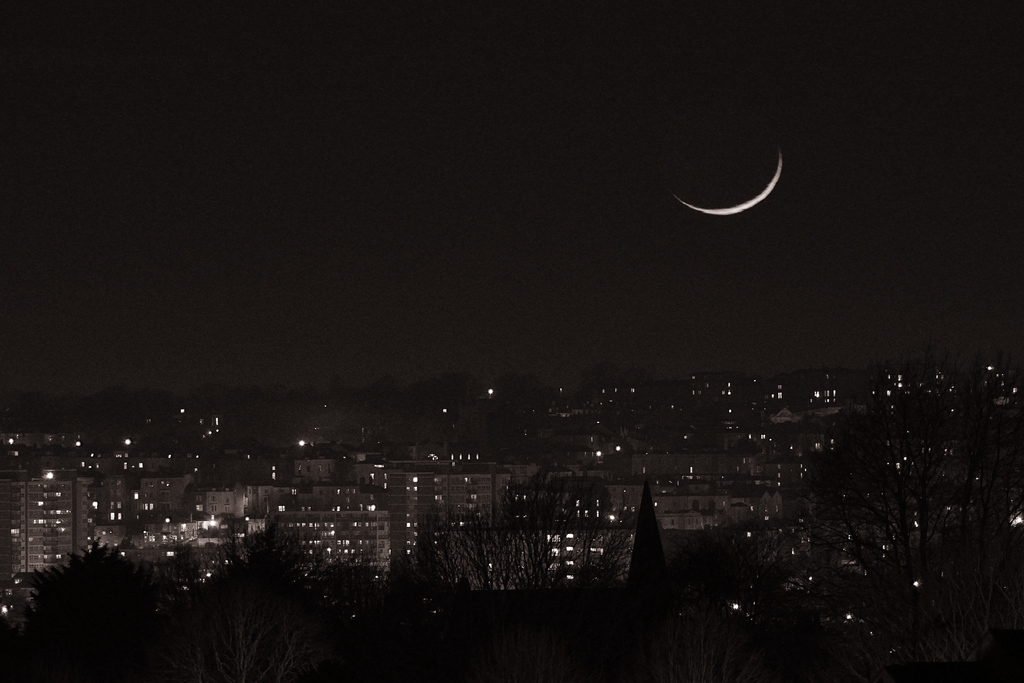
Taken from the top of Troopers Hill, overlooking Bristol, while I was actually out looking for the Pan-STARRS comet that should have been visible, but sadly wasn’t, due to atmospheric haze and light pollution.

I processed this photo to make it monochrome, add a hint of sepia and fake some film grain to make it look a little warmer and sleepier.

Goodnight, Bristol
Goodnight, Bristol