OK, so this is a slight scam. I went to Bristol Harbour on three occasions recently. Only one was the Harbour Festival but I’ve bundled all the pictures into one post. They’re in chronological order.
The black & white pictures were taken in early July when Hannah and I were visited by Fraser and Suzie. The colour digital pictures were taken in mid July when we were visited a second time by the ghost of Christmas past Edmund and Lara. Finally, the colour film picture (just one!) was taken on a third occasion when I visited Cumberland Basin on my own one lunchtime.
Edmund in disguise
HMS Cattistock
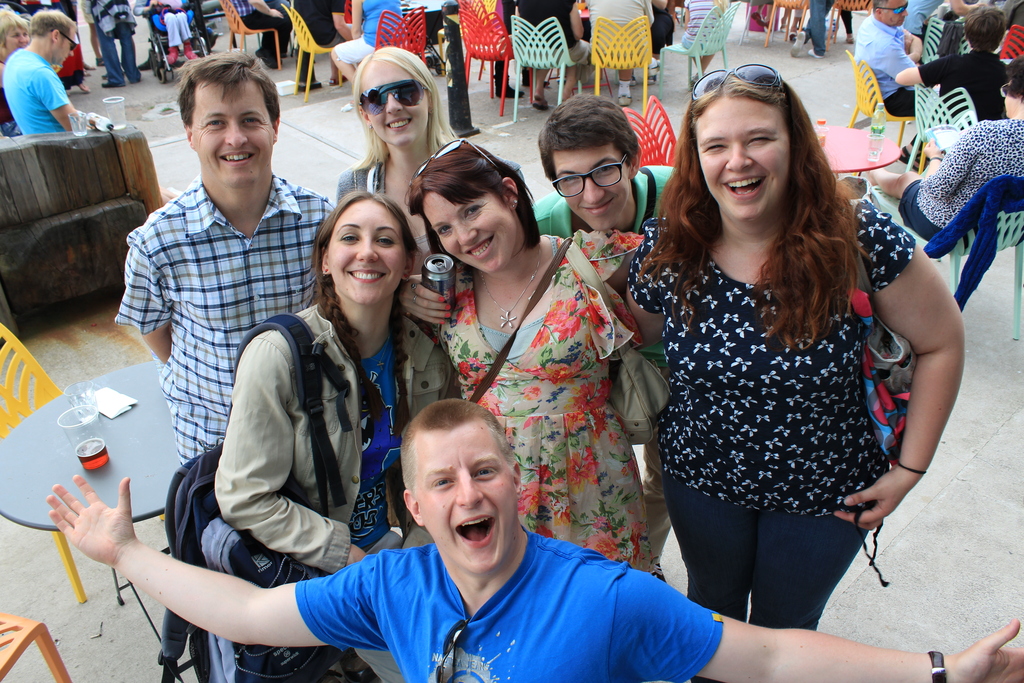
Matt, Emma, Lara, Laura, Edmund, Hannah & Stu
Pick & mix
Pick & mix
Pick & mix
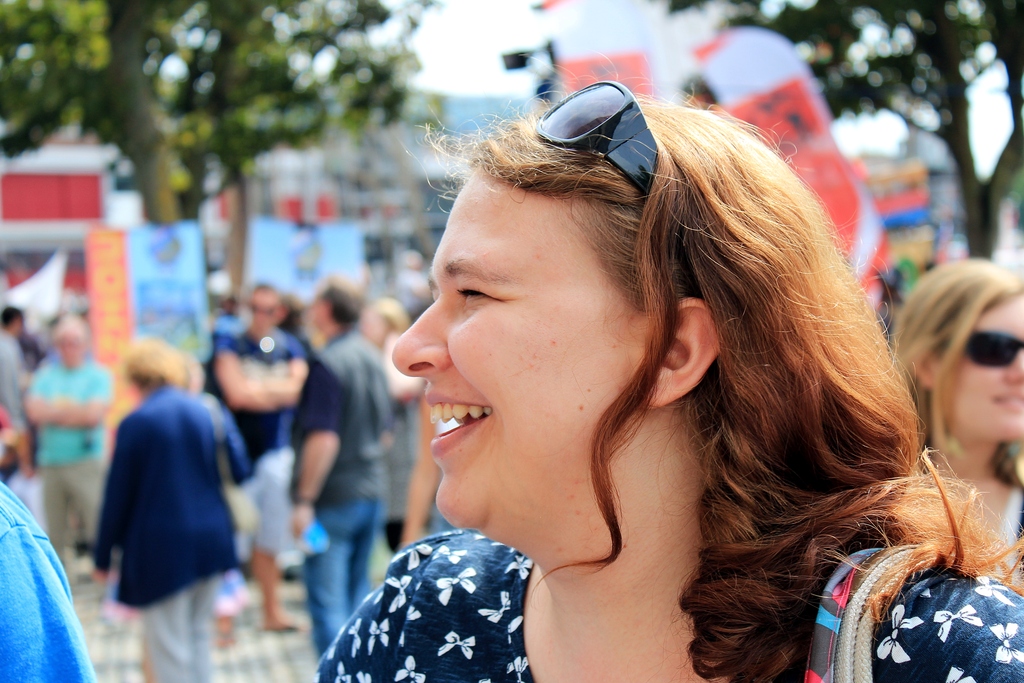
Hannah
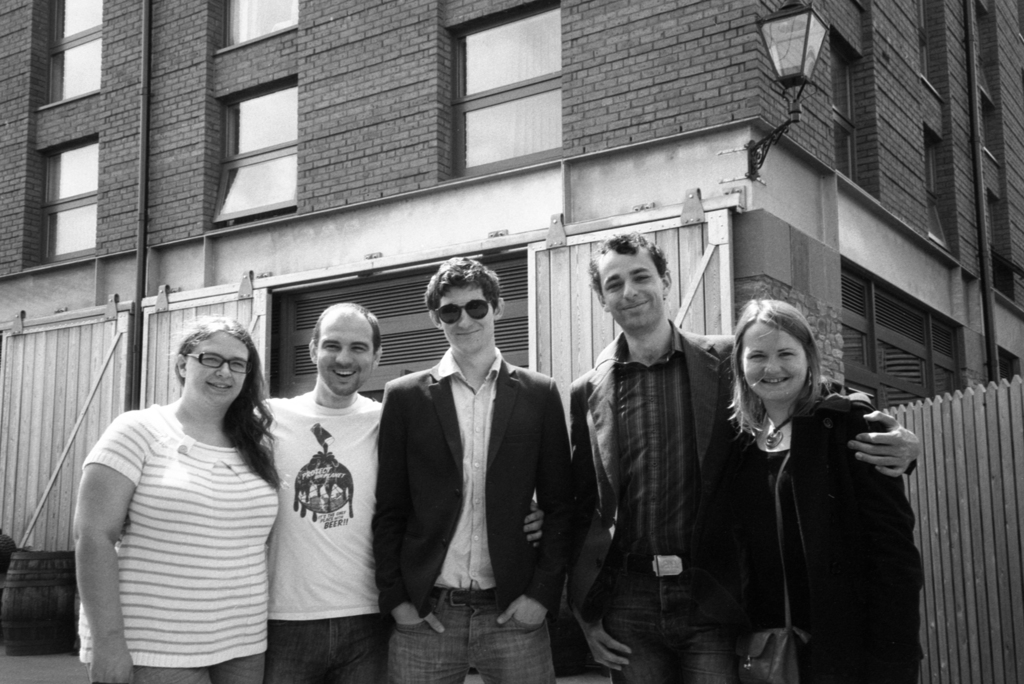
Hannah, Me, Oliver, Fraser & Suzie at SS Great Britain
Oliver on board the SS Great Britain
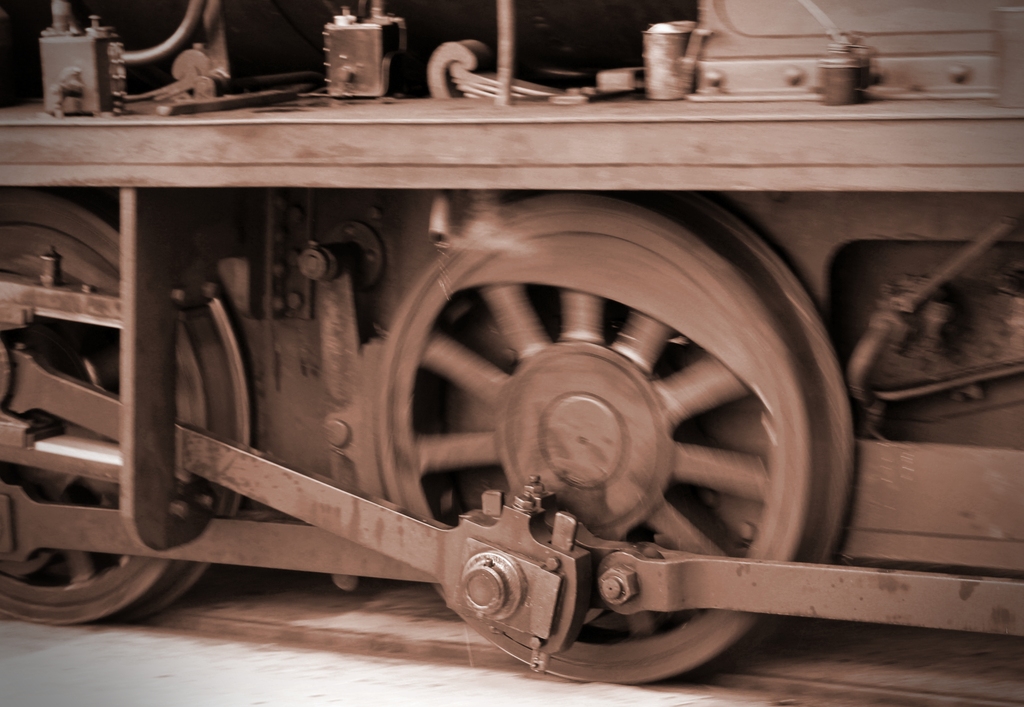
Dockside train
Dockside train & cranes
Dockside cranes
Dockside train
Dockside cottages
Geek info: Digital ones taken with a Canon EOS 600D with 18-55mm f/3.5-5.6 kit lens and Samyang 8mm fisheye lens. Film ones taken on a Zorki-4 rangefinder with Jupiter-12 35mm f/2.8 lens and Industar-26m 52mm f/2.8 lens. Film was Ilford FP4+ 125 (black & white) and Agfa Vista 200 (colour).
This is a picture of my kitten Mittens trying to jump up on the railing at the top of the stairs. She overshot a bit, and landed on her ribs. Luckily, she managed to recover by scrabbling with her back legs and avoided falling down the stairs to her death 😀
The picture was taken on my iPhone which just happened to be in camera mode as she attempted the jump without warning.
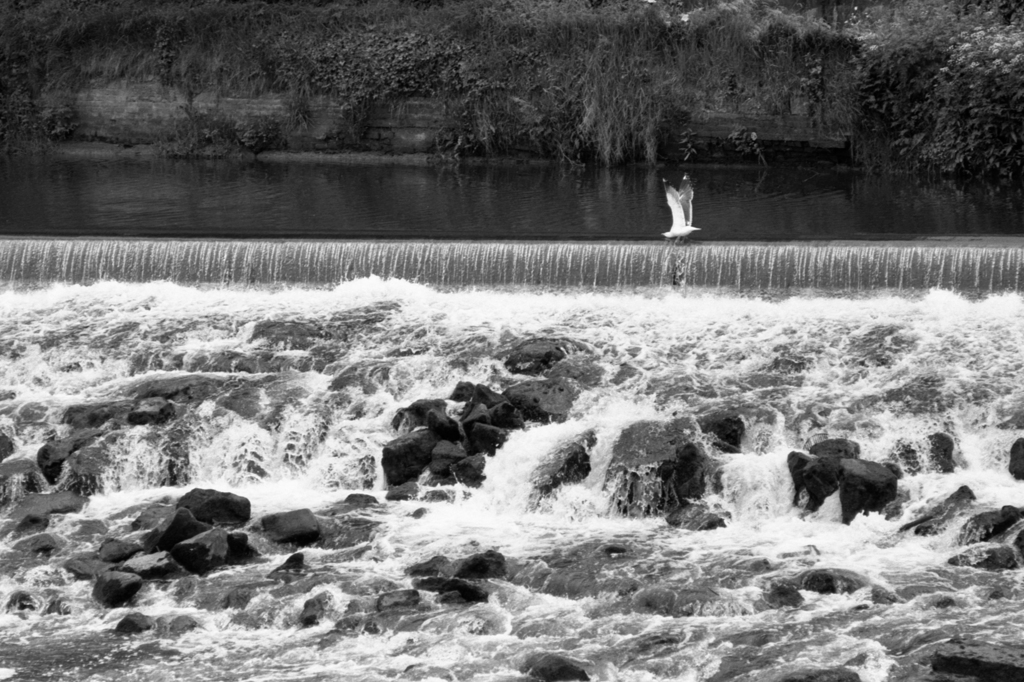
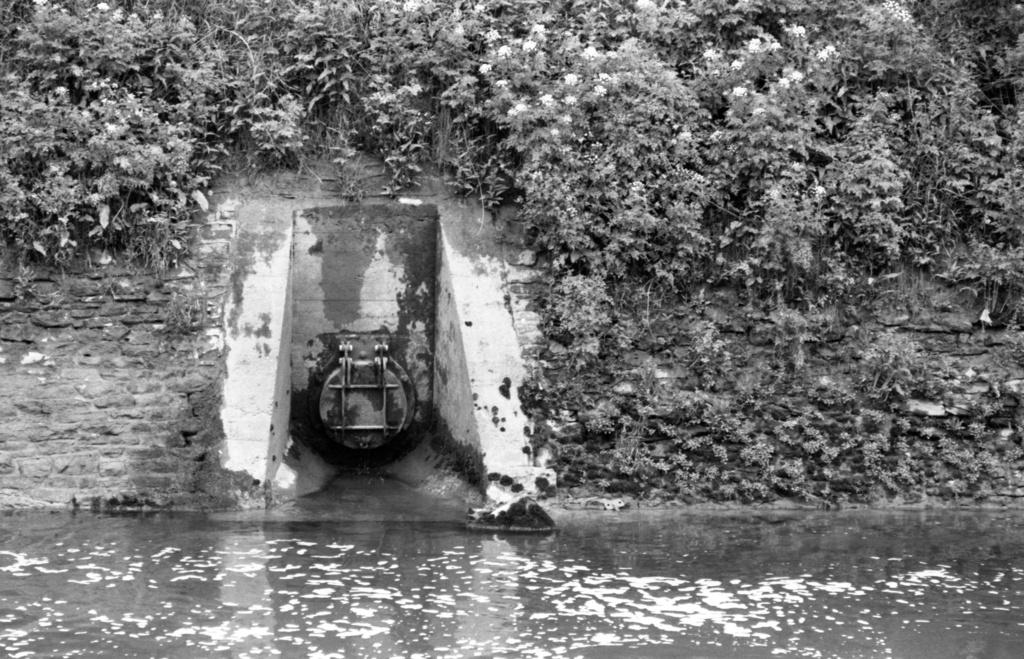
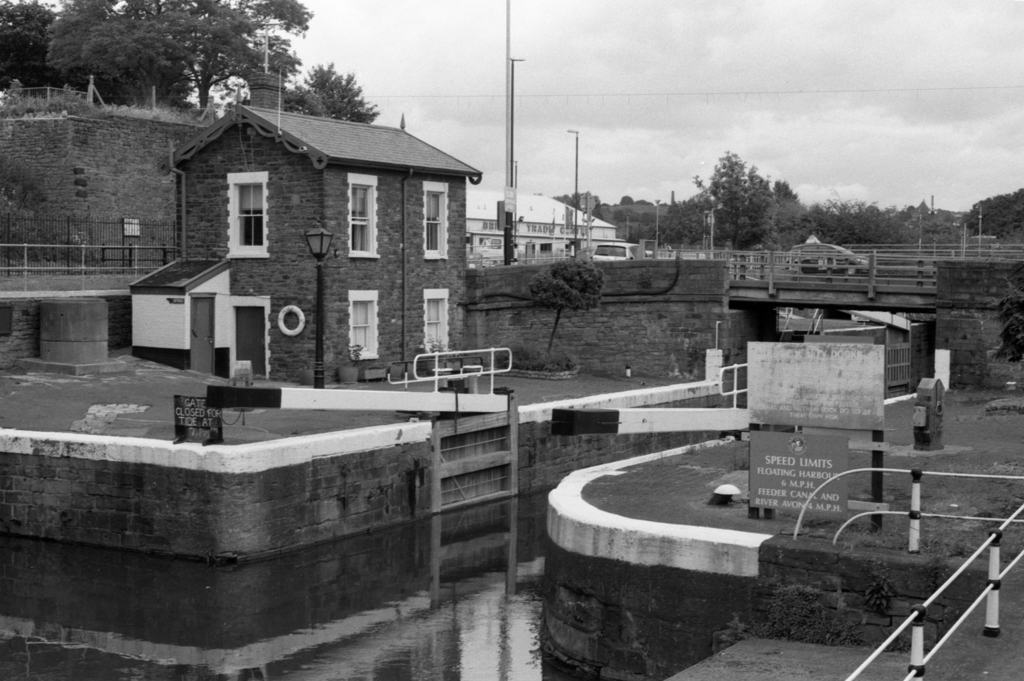
Recently I went for a walk along the River Avon in a part of Bristol called Crew’s Hole. I walked past the place where the river splits into the Feeder canal. The canal is protected by Netham Lock which joins up with Bristol’s floating harbour, while the river goes on ahead to flow over Netham weir. For anyone who lives near Bristol, I recommend it both as a pleasant walk and a photo opportunity.
Also in this gallery are a couple of pictures of Blaise Castle and one of an office block in central Bristol.
I shoot a lot with my vintage cameras. Many date from the 1950s and have probably never been serviced. I’ve no idea how accurate the shutter speeds on them are. For the mostpart, they are probably acceptably accurate, since they seem to produce reasonably well-exposed negatives.
Except for my newest lens, a Horseman 65mm f/5.6 view camera lens. The negatives seemed to be consistently overexposed.
I wondered how I might test the shutter speeds. I don’t have a high speed video camera, but I do have a set of nice microphones and audio equipment. I set up a condenser microphone to record digitally, and I decided to sample at 192kHz to get as many data points as possible. For people with more normal sound hardware, any microphone should be OK, and the standard 44.1kHz will be fine.
Then it was a simple matter of speaking to say which shutter speed I was testing, and recording the sounds of the shutters at all speeds. By ear, you can’t really distinguish the separate clicks until you get to around 1/15. This sound clip is my test of the Horseman 65mm, which has a leaf shutter in the lens.
Horseman 65mm lens
The tricky bit is picking through the recordings in a graphical sound editor. These three screenshots show relatively straightforward readouts from the sound file. Others were extremely hard or impossible to make out.
Assuming these readings are accurate, it would explain why the negatives I exposed with a 1″ shutter speed are overexposed!
However, I ran into a few snags with this experiment:
Cameras make other noises than just the sound of the shutter. The sounds of actuation levers, clockwork and springs can mask the click of a shutter quite easily, especially at fast shutter speeds.
Focal plane shutters in particular make more than two clicks (because they have two curtains, and both curtains start and stop). It’s hard to know which two clicks to measure the time distance between.
There doesn’t seem to be a systematic error. The same shutter can be too fast and too slow at different speeds. This makes it really hard to use the data to “calibrate” itself and decide which of the peaks are the right ones.
Maybe this is a potentially useful technique, but I reckon the only way to be sure about your shutter speed is to video it with a high speed video camera, and inspect the footage.
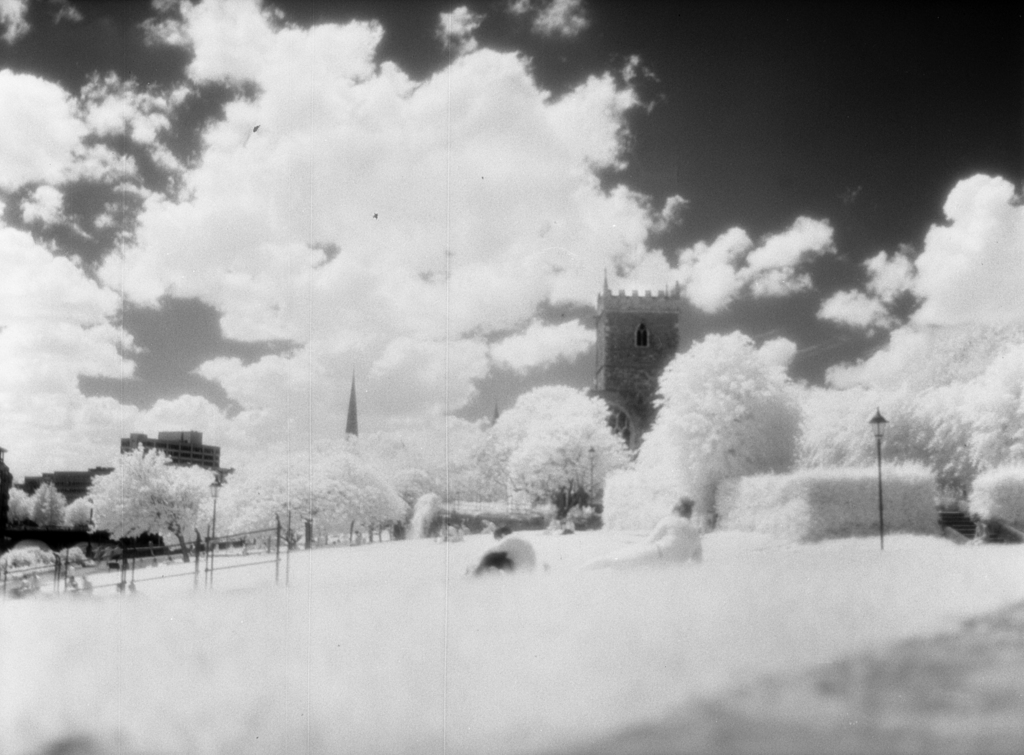
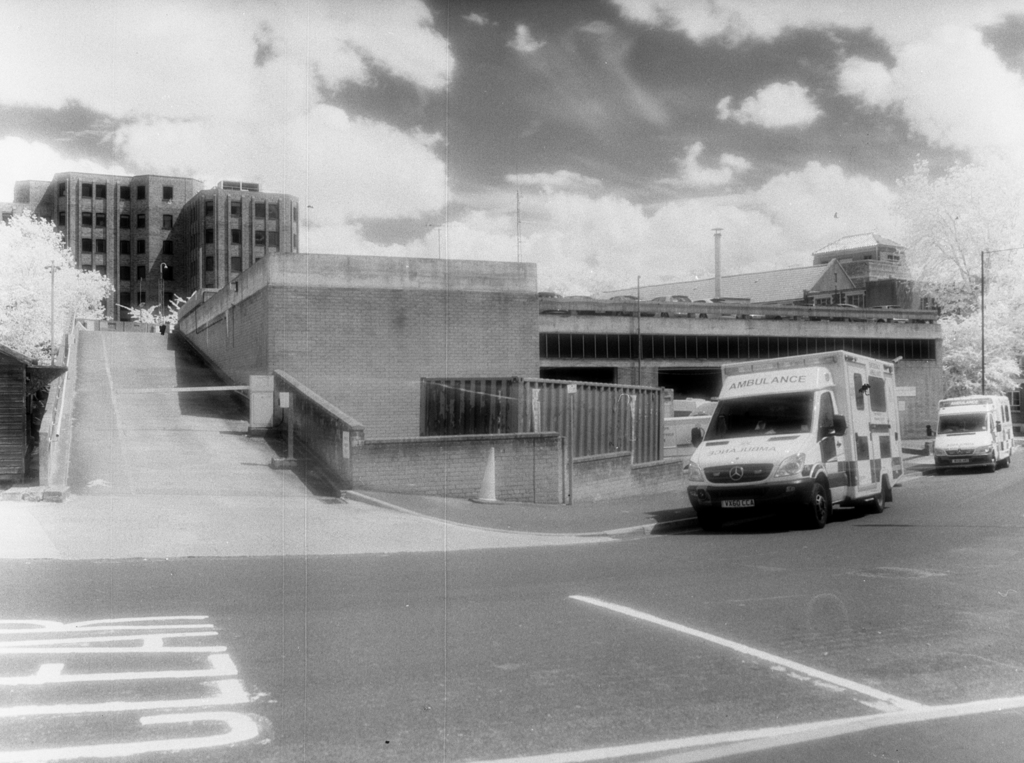
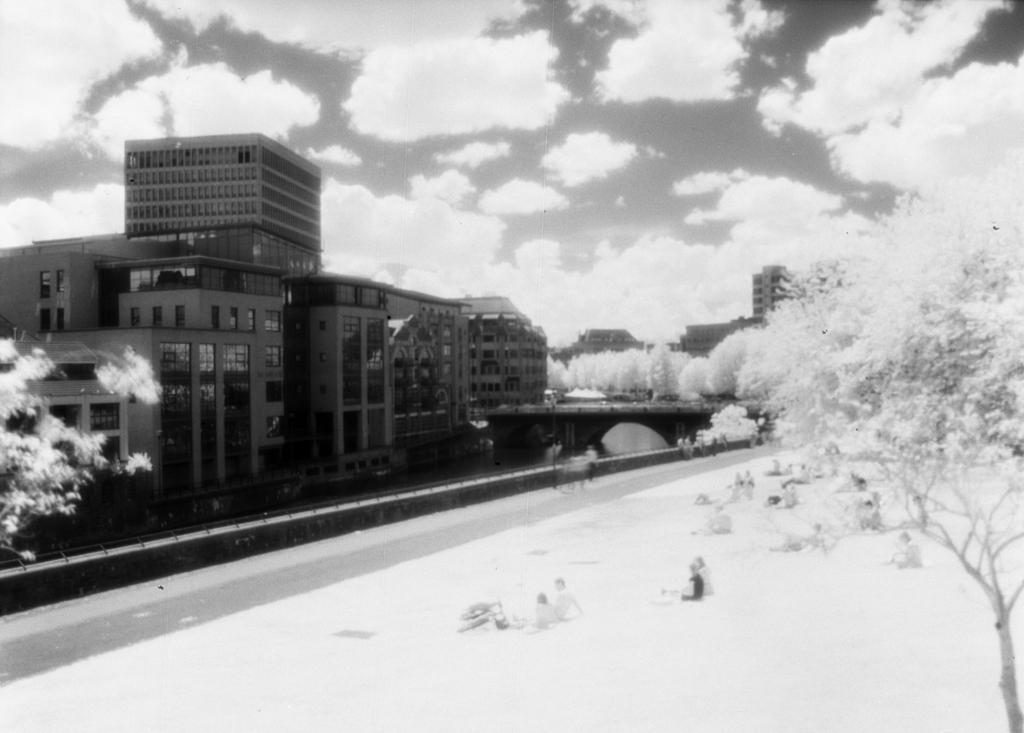
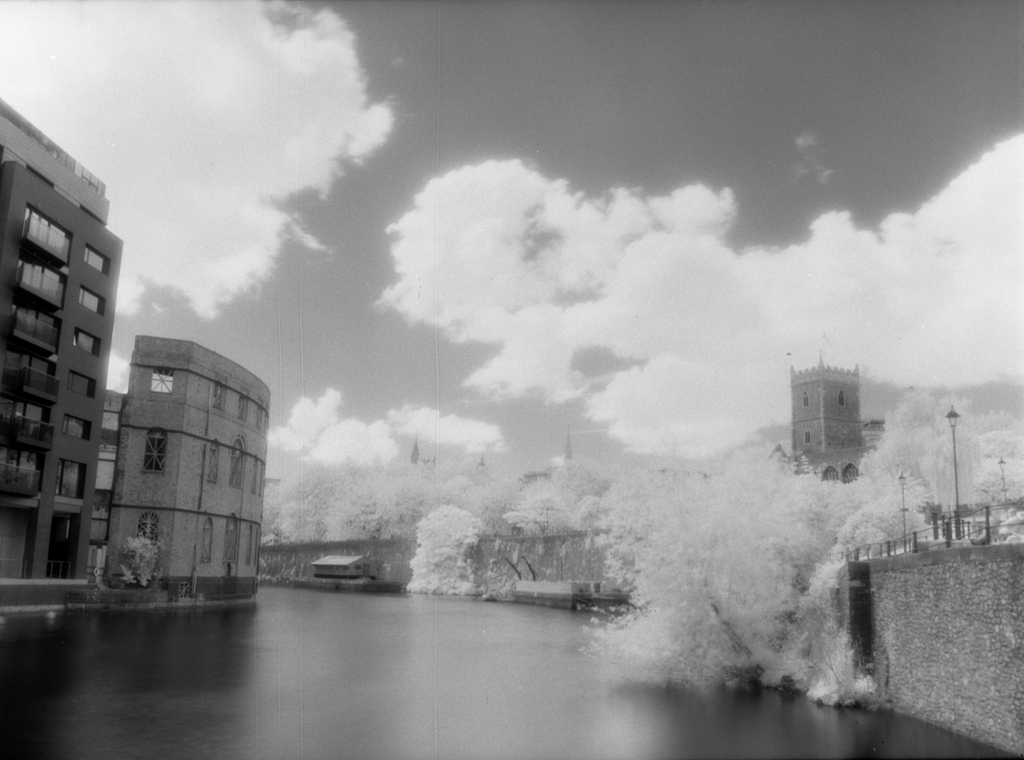
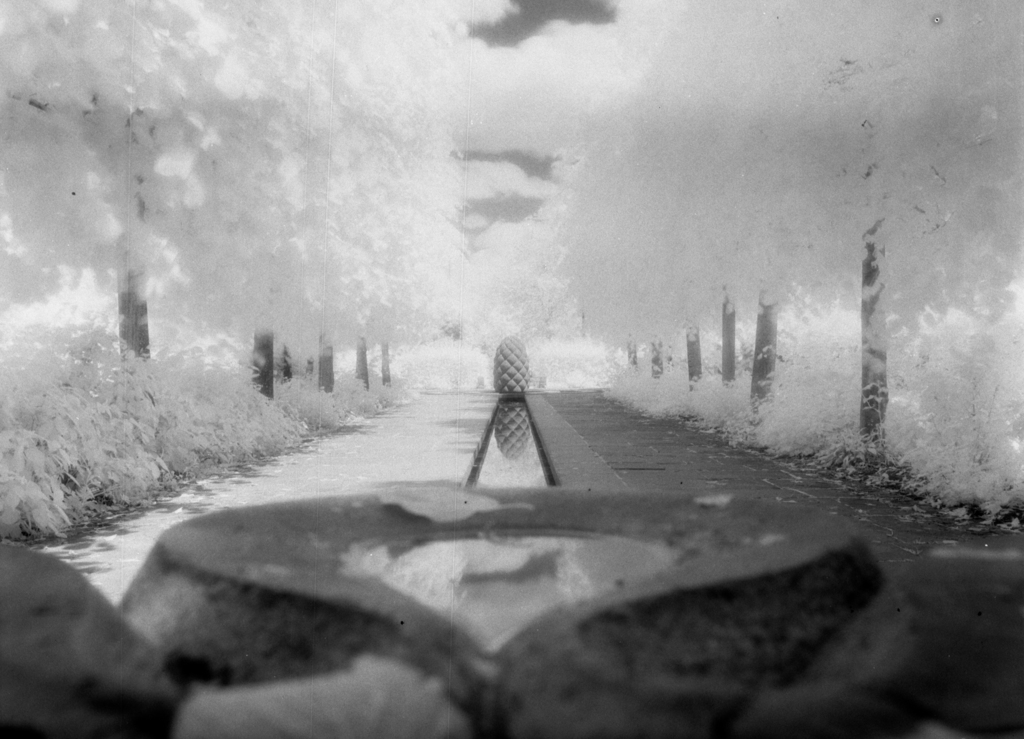
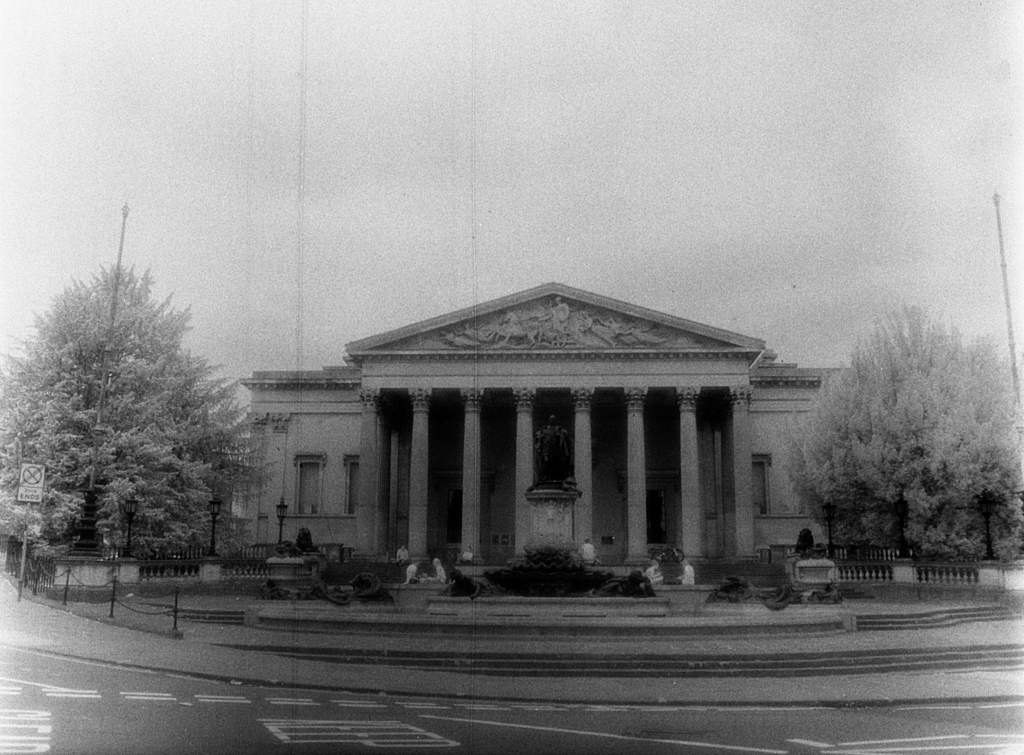
Getting the exposure right with infrared photography is notoriously hard. Last time I tried infrared, back in Spring, I made a roll of widely bracketed shots and compared them to meter readings of visible light. I calculated that whatever the meter said, I needed to add 9 stops[1]. Having come up with this value I then shot a roll of film using this method, no bracketing – and it worked a treat.
However, that was Spring, this is Summer, and there is a lot more infrared radiation floating around. I thought the amount of IR would increase in proportion to visible light, so my 9 stop compensation would still work, but unfortunately that wasn’t true and this roll is grossly over-exposed. Perhaps 6 stops would have been better.
These shots were so overexposed that there is a very poor dynamic range and lots of grain. Some of the frames are worse than others. They were all shot with my Mamiya RB67, using a Mamiya-Sekor C 50mm wide-angle lens, and Efke IR 820 Aura film in the 6×4.5 frame format.
Ambulance station
Bristol Bridge
Castle Park
Castle Park
Castle Park
Victoria Rooms, Bristol
That’s a lot, but the value is also specific to my filter (760nm) and film (Efke IR 820 Aura). You’ll need to come up with your own value if you are shooting infrared film yourself. Have a look at my notes for figuring this stuff out.
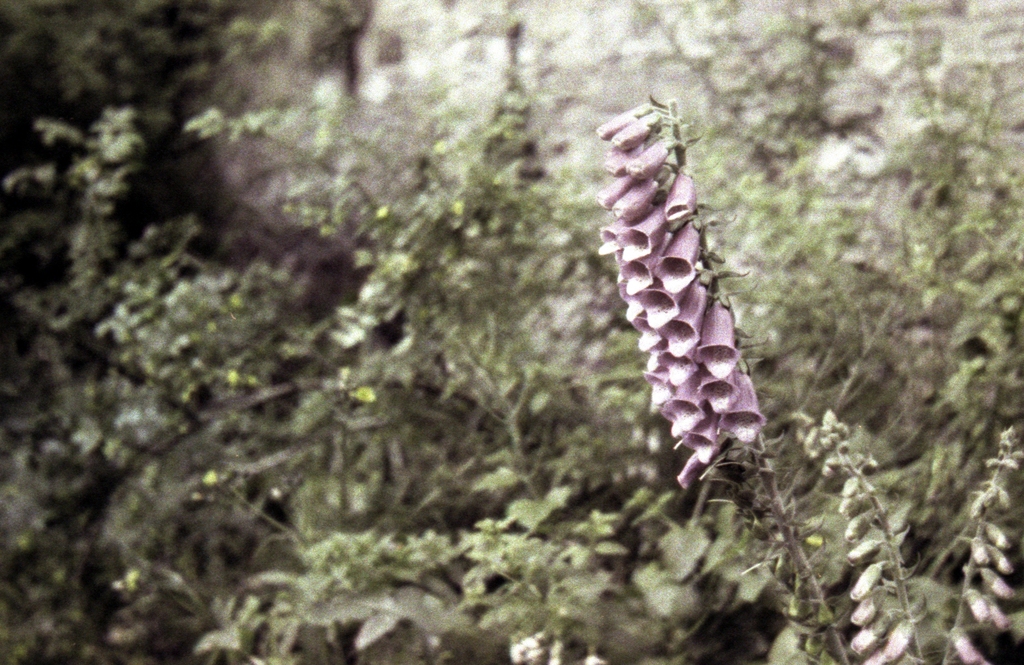
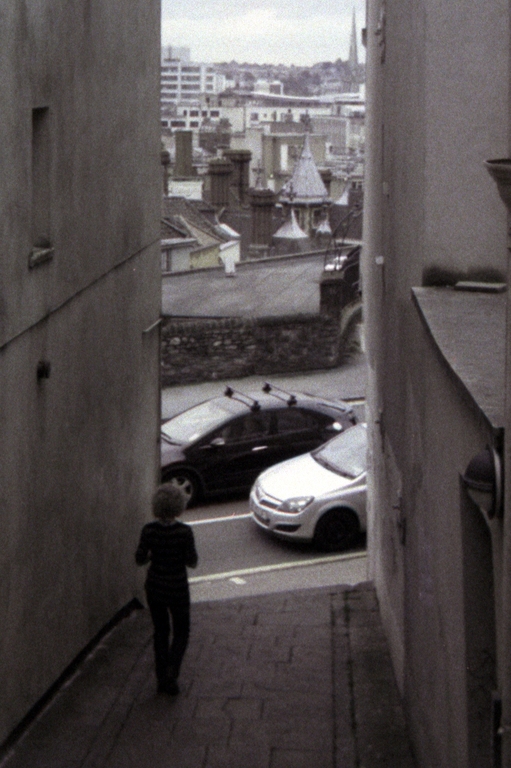
For these pictures of Bristol, I tried a technique called bleach bypass. The images were shot on colour film, underexposed by one stop and then during colour development, I skipped the bleaching step, so you end up with a black & white image superimposed over the colour image. It does really strange things to the contrast and saturation of colours. This is how the images came from the film – they have not been edited.
As this week’s photo challenge is 20 feet below, there is a natural tendency of these photos to focus on things seen from a vantage point.
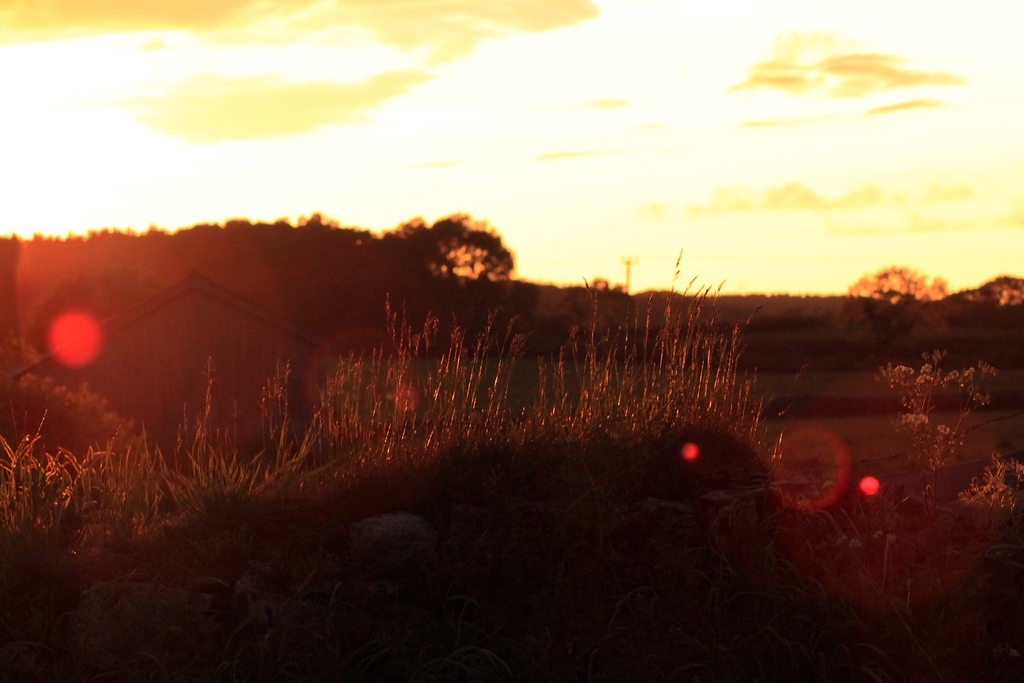
On the way home from our photo-expedition to Burrow Mump and Berrow Beach, we spotted a golden sunset coming across the road. We stopped at the next possible place, which happened to be the entrance to Long Wrangle Farm.
The sun was very low on the horizon and the light was changing rapidly, so it was a challenge to make the most of the available light. I’m pleased with my results.
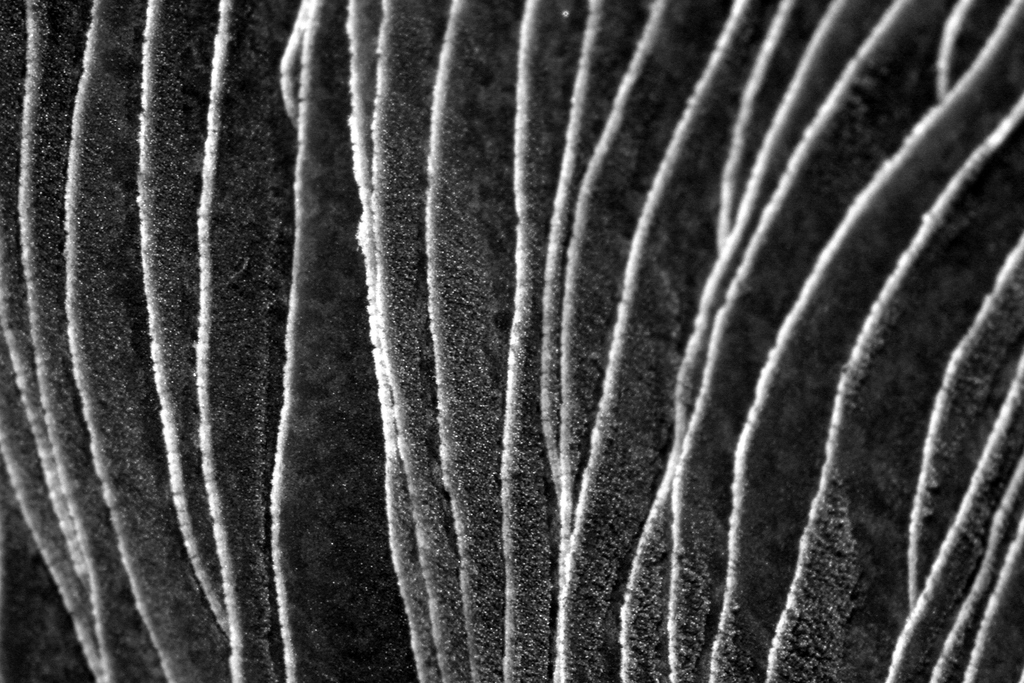
For this week’s Photo Challenge we have to take a mystery macro picture. It’s supposed to be obscure, and then there will be a guessing game before the zoomed-out versions of the entries are revealed.
Super macro
I won’t say what this picture is of, but I’ll say a word about my macro equipment. I have a Tamron 90mm f/2.8 macro lens which is capable of producing a life-size image of the object on the sensor, known as a 1:1 macro lens. I didn’t use that.
Instead, I used an old, Soviet lens (a Helios 44M 58mm f/2.0) attached to my camera via some leather bellows which can be extended as far as 15cm. This gives around 5x magnification, so you can fill an APS-C sensor with an object that is only 5mm wide. It sounds good, but the flip side is that you get extremely shallow depth of field (fractions of a millimetre!) and that you throw away almost all of the light that the lens transmits. You need a lot of light to make this work – especially if you stop down to improve the depth of field.
The picture above was taken at ISO400, f/16, 30 seconds. I decided not to use a flash but rather to set up a very sturdy tripod (and shut the kitten in the other room, because she likes to attack my tripod’s carry strap).
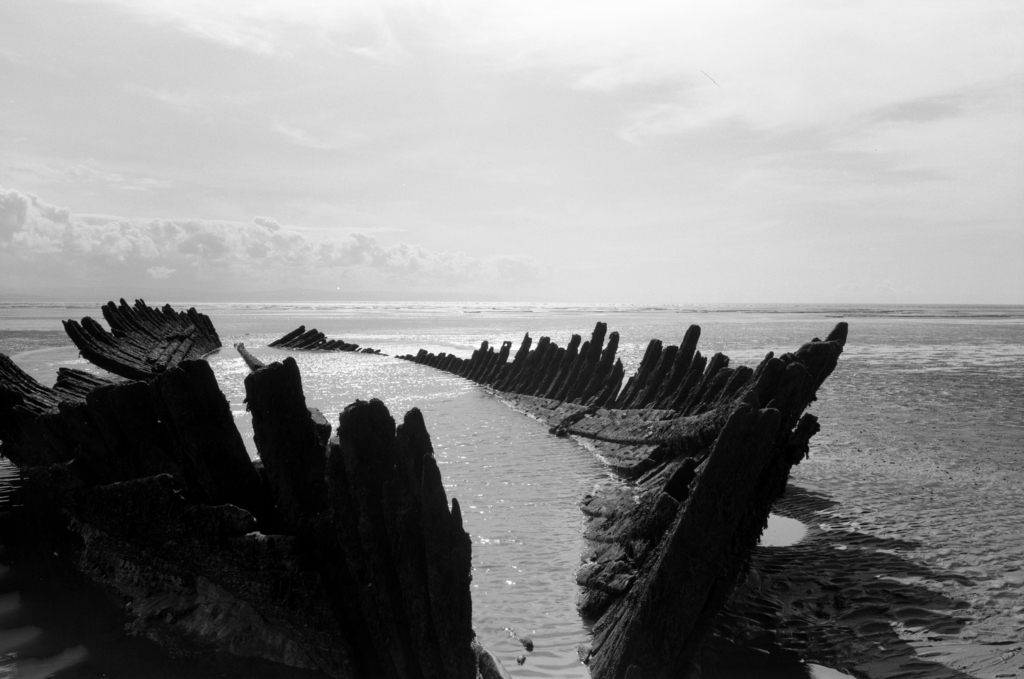
I went to Berrow beach with my Horseman view camera, in hope of finding the wreck of the Norwegian sailing ship SS Nornen, which ran aground in 1897. I found the wreck at low tide, although the lighting was a bit flat and boring. I think I need to return some time when low tide coincides with sunset.
Berrow shipwreck
On the same film was this picture of Gloucester Cathedral. Unfortunately I appear to have made a double-exposure error. The other picture is a view of the Avon Gorge in Bristol, seen from the Leigh Woods side. They look like they would have come out nicely, so I’ll have to return to both locations and re-shoot.
Yesterday I visited Burrow Mump with my friend Nathan, for the purpose of landscape photography. Burrow Mump is a hill just outside the village of Burrowbridge. Overlooking Burrowbridge and Southlake moor, St Michael’s church stands on top of the hill. Sheep roam free on the hill.
I’m pleased with what I achieved – the architecture, the landscapes. I also tried some more unusual techniques – a normal panorama, a stereographic panorama (a “roundograph”) and some HDR too.























 Jonathan Gazeley