A letter to Top Gear

The result of an idle thought.

Dear Top Gear,

I’m trying to imagine how a car would handle if mounted on bicycle wheels. I wager that some sturdy mountain bike wheels would take the weight of a light car, and that it could probably be driven forward. I bet the spokes would disintegrate as soon as the driver tried to steer at all.

I’ve looked around on the internet for videos of other crazy people who might have tried this, and I found nothing. It would therefore make my day if someone could persuade James May to get his spanners out and fit some 26″ mountain bike wheels to a Renault Clio.

Best,
Jonathan

Building a home darkroom

I have worked with film for some time now. From day one I developed my own black & white film at home. This doesn’t take up too much room, so I was able to do it in the bathroom (which is completely internal, with no window).

More recently, I got into printing my negatives rather than just scanning them. For printing, you need more equipment, larger equipment, and a lot of space. Our tiny bathroom wasn’t big enough, so I converted my loft into a darkroom. Here’s how.

I used the space in my loft for my darkroom. It’s quite large, and partially boarded up. I added some more boards to increase the floorspace. Luckily the loft already had a pull-down ladder, so access was easy. You can also see the extension lead I added.

The ladder

For my main work area, I used a spare dining table with two chairs against one wall. There’s no other furniture up there, although I have some boxes to keep things in.

The darkroom

There’s a standing lamp with a 100W bulb which gives reasonable illumination in the work area. The switch is in easy reach of the chair for easy blackout. I also have a clock which ticks loudly, so I can time things in the dark.

The enlarger and lamp

In a couple of areas, the boards overhang joists without reaching the next joist, and so they are unsupported. I taped these areas, and the thin trapdoor, with hazard tape to remind me not to step on them. Luckily these areas are not in the main floor area.

Hazard tape

I also attached some kitchen cupboard handles to the inside of the trapdoor, to make it easier to open from inside. Don’t want to get trapped in the loft!

The trapdoor

There’s no running water, so I bought a jerry can with a tap. This stands on a higher level than the floor, and I put a large bowl underneath the tap. The jerry can holds ten litres, which is enough to last me for several darkroom sessions. I made sure the bowl holds at least ten litres, so it will never accidentally overflow. The paler tray has some small holes at one end, so I can wash prints under running water, while submerged.

The water tank

Being in the loft, with no insulation against the outside world, the temperature can get quite low if the sun isn’t shining. I don’t personally mind being cold, but the chemicals do. I have a fan heater to boost the temperature to an acceptable working range. There’s a thermometer hanging from one of the roof supports. However, I store the chemicals in the house so they keep close to working temperature.

You can also see the safelight in the background, with a choice of three colours.

My thermometer

Also hanging from the roof supports – a drying line for wet prints. This small one only holds three or four prints, but there’s plenty more room to hang more photos.

The drying line

Of course, I’d love a larger workspace, one without roof supports, and one without fibreglass everywhere. But this will do nicely for now, and it’s all I need to develop films and make prints from my classic camera collection. 🙂

Your guide to buying a digital compact camera

Most of the photography articles on this site are about advanced cameras and techniques. But recently someone asked me for advice on buying a compact camera for a holiday, so I decided to write this guide. Hopefully it will be useful.

Lens

There’s a lot to know about lenses, and they have a huge impact on the quality of your photos – yet they are hardly discussed when talking about compact or point & shoot cameras.

A good rule of thumb is judging the size of the front piece of glass in the lens. In a phone camera this is probably not more than a couple of millimetres in diameter, and the quality shows. Good lenses are expensive, but aim for at least a centimetre across, and preferably more.

You can also learn something from the focal length. Roughly speaking, the more the lens “pops out” of the camera, the better. Again, phone cameras are very thin with a focal length of a few millimetres at best. Modern compacts have a motorised lens that makes them a few centimetres deep when switched on. A longer focal length usually implies a larger image sensor, which is a plus for image quality.

On most cameras, you’ll find some numbers printed on the lens. Usually this will give the range of focal lengths of the zoom lens. You can use this information to compare cameras. For example, the Fujifilm J20 in the picture above has a focal range of 6.3-18.9mm.

There is usually another number printed on the lens. This is the maximum diameter of the aperture. You don’t need to worry about what this means, but a lower value (e.g. 2.8) is better. Lower values mean the camera works better in low light where you can’t use flash, and will give nicer background blur. In the Fujifilm J20 shown above, the range is 3.1 when fully zoomed out, and 5.6 when fully zoomed in.

It’s also worth briefly mentioning optical zoom. On compacts this is given as a number like 10x, which means you can zoom in ten times closer. In focal lengths, this would be represented as something like 5-50mm. In general, a higher optical zoom means a larger lens and a heavier camera. The Fujifilm J20 shown above offers 3x optical zoom. You might like to go for a higher-power zoom if you are planning on going on safari, etc. Avoid digital zoom.

Batteries and chargers

So far we’ve talked about image quality but there is a lot more to consider. Most cameras now come with lithium-ion battery packs, rather than AA batteries. This means longer battery life but also that it’s harder to get new batteries if you run out of juice on the move.

An important factor is how the batteries are recharged. Do they come out of the camera and go into a charger, or do you have to plug the camera into a charger? If you have to plug the camera in to charge the battery, you can’t also use it at the same time.

For most people it’s best to buy at least two batteries so you can be charging one in the charger while using another at the same time. If you carry spare batteries with you, you can easily swap when you run out.

Check that your battery charger can work overseas. Most can, and are marked with 110~240V. You might need a different cable or adapter, though. Amazon is probably a good place to look for alternative cables for your camera battery charger.

Memory cards

Memory cards are cheap now, so you might as well find out the largest size your camera can take, and buy that size. As a rule of thumb, most modern compacts take photos in JPEG format that are around 3-4 MB in size. You could save around 1000 photos on a 4 GB card.

Most importantly, buy two cards. If you haven’t the budget, it’s better to buy two small ones than one large one. If you are going on holiday, swap the cards over every day. That way if one breaks, or you lose one, you still lose half the photos but you lose every other day, rather than the first or second half of the holiday, or worse – all of them.

Always keep the cards in their little plastic cases to keep them clean. Consider keeping them in your wallet’s coin pouch so you don’t lose them.

If you run out of space, almost all tourist places sell memory cards these days, so you can easily buy another card and avoid deleting any photos.

Other features

Some cameras have other features that you may or may not want. Decide which you want in advance, and don’t let shop salesmen try to change your mind. Consider:

  • Movies. Almost all cameras can record video now, but some do it in poor quality as a secondary feature, or limited to 1 minute. If you want to use your camera as a camcorder, pick one that does video properly.
  • Panorama feature
  • GPS geotagging (records where each photo was taken – can be useful on a tour)
  • Image stabilisation (useful when you usually use full zoom)

Choosing the camera

It’s quite important to see the camera in real life before buying it. Some cameras feel right; others don’t. Some cameras have buttons that seem to be in awkward places.

Seeing the camera in a shop also gives you the opportunity to examine the build quality. Sure, it might tick all the boxes on your wish list, but if it’s plasticky and creaks when you squeeze it then it probably won’t last ten minutes in your pocket. It’s good to look for cameras with metal casing, and a sturdy lens cover. Some cameras have flimsy plastic lens covers that can easily be pushed open in a handbag.

Remember that it’s a bit rude to use a shop to play with a camera, and then buy online. You owe it to the shop to buy from them, but it’s a good idea to print out quotes from online retailers to show to the shop, and use to get a discount. Buying from a real shop gives you somewhere to return the camera easily if it isn’t quite what you were hoping for. Shops will often also do you a deal on a bundle – perhaps a camera, bag, memory card and second battery.

The Roman Baths

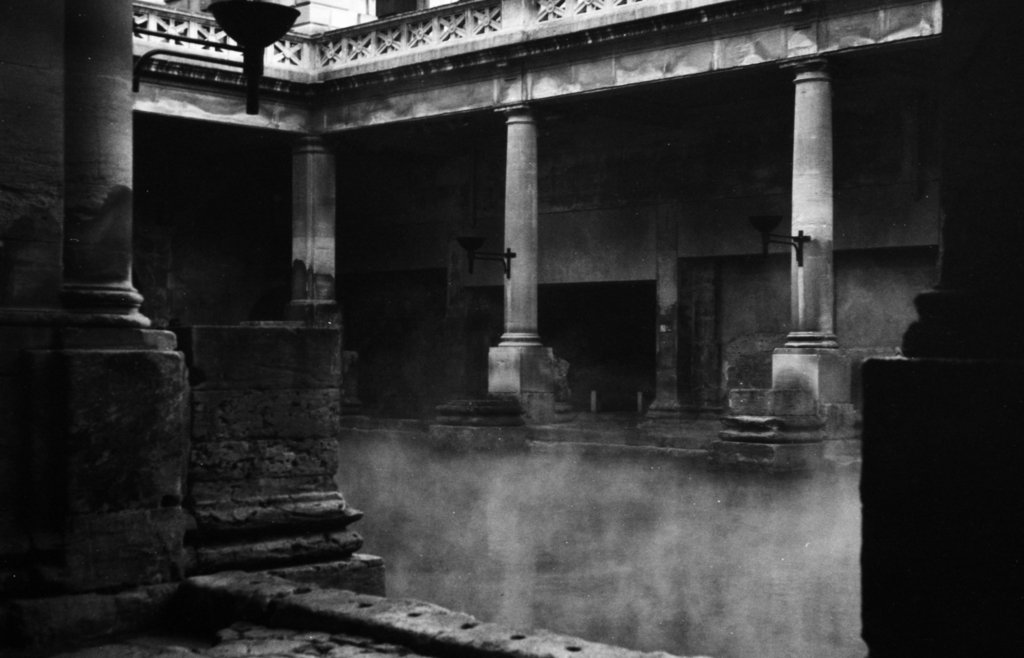
For Hannah’s birthday we visited Bath, and spent a large part of the day at the Roman Baths. I took my “new” Zorki-4 Soviet rangefinder to try it out.

Here’s the birthday girl herself.

This Roman chap stands in the shadow of the Abbey.

And a few interior shots of the baths, to try and capture the steam that rises from the surface of the hot water on a cold day.

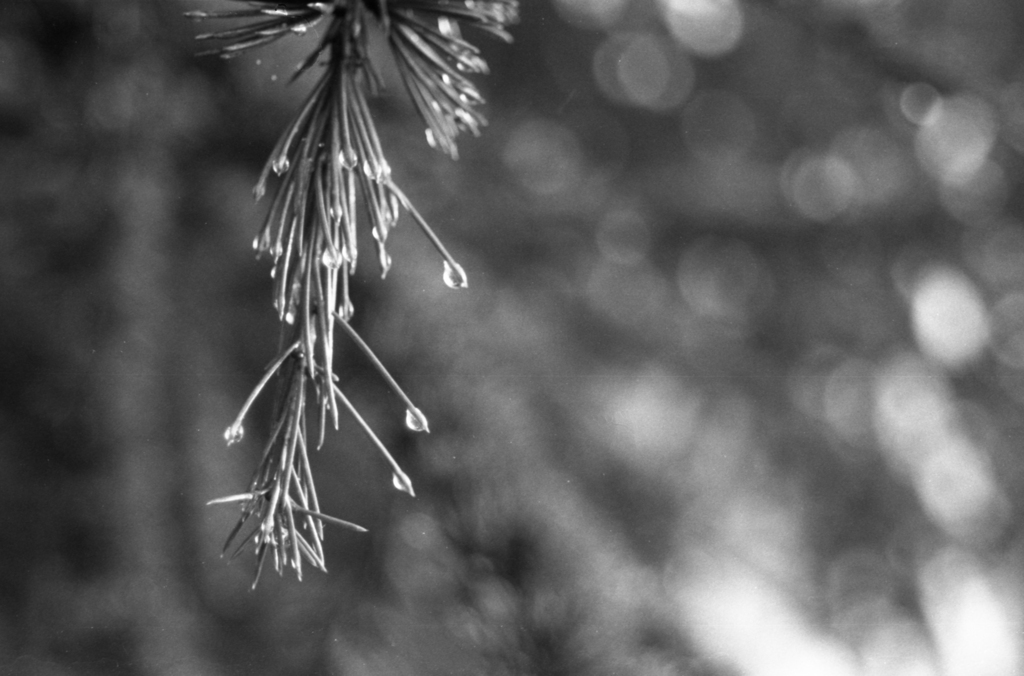
And finally, the obligatory snowy tree from Oldbury Court Estate.

Long telephoto lenses

If you want to take photos at the so-called “super telephoto” range, then you have a few options. They have relative costs and relative merits. Let’s go through the main ones.

Genuine super telephoto lens

I’m a Canon shooter, so I will refer to the Canon lenses – but the same applies to Nikon, Sony and others.

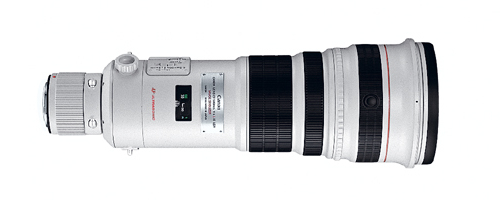
If you’re doing it by the Canon book, and you want a 500mm lens, then you are supposed to go out and buy a Canon 500mm or 600mm (or longer) lens. At the time of writing the 500mm and 600mm telephoto primes are £8,280 and £10,820 respectively.

Canon EF 500mm f/4.0L IS USM

That’s a lot of cash to throw at a lens. It might pay off for a professional sports photographer, but for an amateur like me, a specialist lens like this would only see occasional use.

There are third-party options, such as the Tamron 200-500mm and the Sigma 150-500mm. These are both priced at under £1000, but do not offer the same quality as the genuine Canon lenses. The quality would be fine for my uses, but a thousand pounds is still too much for me to spend.

Tamron SP AF200-500mm F/5-6.3 Di

As I said, I don’t have any of these lenses, so there isn’t a sample picture in this section.

Mirror lenses

On the face of it, mirror lenses seem like a cheap way of getting a very long focal length. For under £100 you can buy a 500mm mirror lens.

Opteka 500mm f/8 Mirror Lens

Even on the outside of the box we can get an indication of how crude these lenses are. They are fully manual-focus. There is no electronic communication with the camera body. The aperture is fixed, and is usually quite slow (e.g. f/8). They are usually manufactured by names you’ve never heard of before. The sample I tried was the 500mm mirror lens from Opteka.

I knew this before buying, and I was happy with the risks. I have a collection of old cameras so a manual, mechanical lens is nothing new to me. In the end I was extremely disappointed with the lens for two reasons. The sharpness was very poor, and the manual focus ring was extremely sensitive. It was near-impossible to get the moon in focus.

This is the best picture I managed with it. It’s blurry and there is a lot of chromatic aberration. And this was with the moon – imagine trying to take a photo of a bird in flight with this lens. Forget it.

The moon

I wrote a post on my blog entitled “Mirror lenses: worth it?“. You’ve already had a taste of my sentiment here, but there’s more detail in that post.

Preset lenses

Preset lenses are a sort of halfway house between mirror lenses and proper telephoto lenses. They use glass lenses rather than mirrors, but are otherwise like the mirror lenses. They are fully manual, no electronic control and either a fixed aperture, or a choice or 2 apertures that can be flipped in and out of the optical path. If you’re lucky it might have a diaphragm.

Opteka 500mm f/8 Preset Telephoto Lens

Pretty much the same conditions apply to these as to the mirror lenses. They’re slow, hard to focus and have poor quality glass. Some people online have posted surprisingly good pictures, although I think these are the exception, rather than the rule. Opteka (among others) sell a 500mm preset lens.

I don’t own a preset lens, so there’s no sample picture in this section.

Teleconverters

Last but not least, I’ll cover teleconverters. These are small adapters that fits between your lens and your camera body, and increase the focal length, either by 1.4× or 2×.

Kenko Teleplus MC7 2x Teleconverter

The advantage is that you can use your existing 300mm lens, or buy one. They are common, and not too expensive. In most cases, there is a small loss of sharpness but usually this loss is acceptable.

I bought a Kenko Teleplus MC7, which is one of the cheaper teleconverters, at a little over £100. There are also superior offerings from Kenko (£145) and Canon (£236).

I already owned a Tamron 70-300mm zoom lens which came as a bundle with my DSLR, but can also be bought for around £100. Almost every lensmaker sells something that can reach 300mm. Adding a £100 teleconverter has given me a 600mm lens, with autofocus (in bright light), with proper lens glass and a variable aperture. It is a far superior solution to a preset or mirror lens.

Aside from some loss of sharpness, the other main snag is that you lose two stops of exposure from your lens. For example, my Tamron lens has a maximum aperture of f/5.6 at 300mm. With the teleconverter, it’s stopped down to f/11. This isn’t enough for the autofocus to work except in very bright sunlight. Bear this in mind. Fortunately, manual focus on the Tamron is nice and the ring has enough granularity to be able to focus accurately.

While not perfect, within minutes of attaching the teleconverter I took several photos like this.

The moon

Summary

So my advice to anyone wanting to move into longer focal lengths is to buy a teleconverter for your 300mm lens. If you don’t have a 300mm lens, buy one with a teleconverter. It’s much cheaper than a Canon L-series telephoto lens, and much, much better than messing around with a mirror or preset lens.

Enlarger bulbs for the Durst C35

Today I bought and collected a second-hand Durst C35 enlarger. It needed a new bulb, and the manual says very little about bulbs except you must use a MELAMP 55.

Users in some forums, including this one, say that compatible bulbs are difficult to find, or expensive. A little research tells me that the correct bulb is 55W, with an E26 Edison screw fitting, and an R20 glass envelope.

Thanks to Don’s Bulbs, it was easy to find out that these are all standards, and R20 is more commonly known as R63 or R64, because the widest part of the glass is 63 or 64mm in diameter.

And I’m delighted to say that Tesco (and probably almost every other retailer of domestic bulbs) have R20 bulbs with an E26 screw – albeit in a 60W version. If you can cope with the tiny difference in power, you can pick up two of these for £2.

The only snag I can see is that these bulbs probably have a different colour balance from the original Durst bulbs. I print in black & white so it doesn’t matter to me, but it might if you were to print in colour.

Night traffic

I spent much of today trying to think of things I could go out and shoot, to try out my new Zorki rangefinder. Unfortunately it got dark and I missed my chance, but it also gave me an idea. I used the aerial photo view of Google Maps to try and find pedestrian-friendly bridges that cross any of the motorways near Bristol – the M32, M4 or M5.

I found a nice bridge that crosses both the M4 and the Bristol ring road, and set out with a fisheye lens. Here’s the result.

More of Winter at Oldbury Court

I posted the other day with some pictures of frost, fog and ice from Oldbury Court. I actually shot most of a second film on the same day, and I’ve only just finished and processed it. I think these pictures are even better than the last lot, and probably some of my favourite photos of all time.

I used a different film this time, and these photos are sharper, less grainy, and more refined. It’s an altogether different feel.

Let’s start with a few shots of the wooded area, with the stream.

Moving out into the open fields, these walkers caught my attention. Catching the dog mid-run was just good luck, really!

This is another version of the same chestnut tree in my previous post. This time, it has come out sharper and I think I prefer it.

I love the frosty “borders” on these leaves.

And a self portrait.

Catching this bird mid-flight was also luck rather than judgement. I had been following it across the sky with my lens, but with a one-shot film camera I only had one chance to capture it. I like the background – it’s more interesting than a plain sky.

You might have noticed that most of the black & white pictures on this site have high contrast with black blacks. This is the usual style that I prefer. However, on a roll of low-contrast foggy photos, I couldn’t resist sneaking in one contrasty picture.

I love the structure of the ice crystals on these leaves.

To finish up the last couple of shots on the film, I wandered over to the junction between Fishponds Road, Staple Hill Road, and Downend Road.